
Earlier this month, Mauritania joined the long list of African countries whose failed leadership has led to coups. On 6th August, Mauritania’s General Mohamed Ould Abdel Aziz ousted democratically-elected president Sidi Ould Cheikh Abdallahi and declared himself president. Abdel Aziz has since promised to hold elections “soon” and to fight corruption which he says was rampant in the previous regime.
Like the self declared Mauritanian president Abdel Aziz, Pervez Musharraf ascended to power by the gun. He forcefully seized power in 1999 and has ruled Pakistan ever since. He gained some form of international recognition after the 9/11 attack in the U.S. as a key ally in the fight against international terrorism.
Musharaf began to fall out of favor both at home and abroad in 2007 following complains by Afghanistan's president, Hamid Karzai of purported regrouping of Taliban forces in western Pakistani mountains where Osama Bin Laden is believed to be hiding.
Last December’s assassination of former Pakistani Prime Minister Ms. Benazir Bhutto reignited animosity against Musharaf by locals blaming him for not providing sufficient security. His party lost the elections that soon followed.
Like all global leaders, Musharaf made many unpopular decisions during his tenure. However, he chose to “put the people of Pakistan first.” In a televised address, he said that he was satisfied with whatever he had done for his country (including the military coup in 1999) and that he hoped justice would prevail following his resignation. “I put myself to the people of Pakistan to decide about my future and they will do justice,” he said.
Considering how he came to power, Musharaf could have chosen the African route by silencing any opposition and declaring a state of emergency. He chose to step down. Yes he may have caved into political pressure to resign, but he had other available options which he gracefully disregarded. He did not do a Mugabe or the recent happenings in Mauritania.
Everything he did as Pakistani president will determine his future as a civilian since he shed his military coat. The people of Pakistan wanted him out. He has obliged and so should other African leaders who have fallen out of favour with the electorate.

Wednesday, August 27, 2008
Exit Musharraf: A Score for Democracy.

Monday, August 25, 2008
The death Zambia’s Levy Mwanawasa, raises questions about the state of leadership elsewhere in the continent
From The Economist Print Edition
ON PAPER, Levy Mwanawasa should never have been president. He lacked charisma, wit or style—the sort of qualities that propel populists to high office in much of Africa. At rallies even his own supporters were fast bored by the former lawyer’s monotone drawl. His ill-health and slurred speech, the results of a car crash, led to nasty jibes about his mental capacity. When he narrowly won his first, disputed, presidential election in 2001, opponents dubbed him “the cabbage”, deriding him as a stooge for others more powerful.
But Mr Mwanawasa, who died this week in France after suffering in June the latest of several strokes, deserves to be remembered more fondly than the showmen who have beggared much of the continent. In the past seven years he made a serious effort to clean up Zambia’s pervasive corruption. At some political risk, he turned against his predecessor and one-time patron, the diminutive Frederick Chiluba, who was charged with 168 counts of theft. Mr Chiluba was convicted of graft in a civil court in London last year. It was a rare success: few African leaders have been held to such account.
Partly because of his anti-corruption drive, investors liked President Mwanawasa. In the past few years, capital has poured in. Zambia’s mineral-rich economy, like others in Africa, has soared and crashed according to the vagaries of world commodity prices. But its recent growth, at a perky 6% or so a year, driven by copper exports, has at least been married to decent policies that kept inflation lowish and helped spread some benefits to the poor. The economy was lifted, too, by tourists and white farmers diverted from Zimbabwe. Thanks to liberalisation and his own stolid efforts, Mr Mwanawasa got unusually large dollops of aid and debt relief.
In 1991 Zambia was among the first in Africa to bring back multiparty elections; it peacefully ditched its liberation leader, Kenneth Kaunda, after nearly three decades. That generally gracious transition (Mr Kaunda was later accused of skulduggery) was followed by Mr Chiluba’s decision to step down reluctantly in 2002 after the two terms limited by the constitution.
Zambia’s plodding progress could hardly be in greater contrast to the mess next door in Zimbabwe—once Southern Rhodesia to Zambia’s Northern Rhodesia. In the old days, Zambians flocked to Zimbabwe to seek work; now it is vice versa. Robert Mugabe, reliant on his army’s muscle, seems bent on staying on, having smashed his economy. He returned himself to office in June after a violent one-man run-off election. Though he has been holding power-sharing talks with the opposition leader, Morgan Tsvangirai, who won the first round of the presidential poll in March, he is loth to lose executive power.
Zimbabwe’s crisis may well have been resolved by now if regional leaders had dared to stand up together against the repressive Mr Mugabe. On August 16th, at an annual meeting in Johannesburg of the Southern African Development Community (SADC), the 14-country club’s leaders, most of whom also head liberation-movements-turned-ruling-parties, muted their public disquiet at the presence of the 84-year-old despot.
An exception was Botswana’s new president, Ian Khama, who boycotted the event. Mr Mwanawasa, aged 59, was also a rare voice among Africa’s leaders who damned Mr Mugabe’s misrule. Last year he likened Zimbabwe to a “sinking Titanic” and called for the region to demand a change of course. Had he been well, he would have sought to toughen SADC’s stance against Mr Mugabe. Mr Tsvangirai was among the first publicly to lament the Zambian leader’s death.
A new leader, possibly the vice-president, Rupiah Banda, should be elected within 90 days. Afro-optimists hope that Zambia, certainly not Zimbabwe, proves to be a bellwether for the continent. In one respect it is. Though not an oil-producer, Zambia is one of Africa’s biggest recipients of Chinese investment, as the resource-hungry Asian giant pours capital into mining and agriculture. China’s president, Hu Jintao, inaugurated a massive mining-investment zone in the north of Zambia last year. However, among ordinary Zambians anti-Chinese feeling has been growing.
Mr Mwanawasa crowed last year that Zambia, and Africa as a whole, was increasingly taking advantage of Asian interest and investment and called on the West to match it. Seven years of Mr Mwanawasa’s rule has seen some change for the better in Zambia. It is remarkable what a dull diet of cabbage can do.
Monday, August 18, 2008
Politics: "Obama Is Here - McCain don't belong in ANY chair unless he's paralyzed"
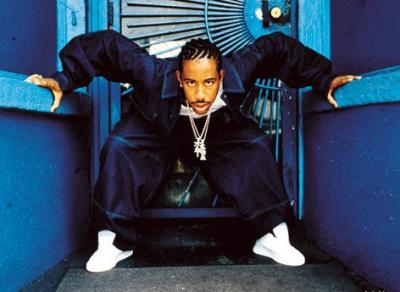
Barack Obama's campaign has already denounced the song and lyrics.
Below are the lyrics to Ludacris's song :
I'm back on it like I just signed my record deal
Yeah the best is here, the Bentley Coup paint is dripping wet, it got sex appeal
Never should have hated
You never should've doubted him
With a slot in the president's iPod Obama shattered 'em
Said I handled his biz and I'm one of his favorite rappers
Well give Luda a special pardon if I'm ever in the slammer
Better yet put him in office, make me your vice president
Hillary hated on you, so that bitch is irrelevant
Jesse talking slick and apologizing for what?
If you said it then you meant it how you want it have a gut!
And all you other politicians trying to hate on my man,
watch us win a majority vote in every state on my man
You can't stop what's bout to happen, we bout to make history
The first black president is destined and it's meant to be
The threats ain't fazing us, the nooses or the jokes
So get off your ass, black people, it's time to get out and vote!
Paint the White House black and I'm sure that's got 'em terrified
McCain don't belong in any chair unless he's paralyzed
Yeah I said it cause Bush is mentally handicapped
Ball up all of his speeches and I throw 'em like candy wrap
'cause what you talking I hear nothing even relevant
and you the worst of all 43 presidents
Get out and vote or the end will be near
The world is ready for change because Obama is here!
'cause Obama is here
The world is ready for change because Obama is here!
when is a coup d’etat not a coup?
by: Austin Ejiet (Daily Monitor)
The cold war had reached its zenith, with the ideological power blocks jostling for supremacy and global domination. Perceived to be exceptionally vulnerable to communist seduction, Africa in particular, was under constant surveillance.
Without the benefit of prior colonial influence, the Soviet bloc was quick to pounce on some African despots mouthing half-cooked Marxist slogans, persuading the good man to allow them open military bases in exchange for military hardware.
The West on the other hand was loathe to see its spheres of influence, nurtured for over a century as colonies, protectorates or “overseas dominions,’ sliding to the other side. The slightest hint of intransigence was dealt with swiftly and ruthlessly.
The demise of the Cold War and the failure of Communism to take root in a serious manner anywhere in Africa eased the stranglehold and spelt the end of military coups.
Unconstitutional changes of governments continued, of course, but via civil wars, rebellions and self-styled liberation struggles. That phase, too, is beginning to fade away. These bush wars, some of them lasting as long as 30 years, are costly in terms of lives - military as well as civilian – and in terms of wasteful expenditure and the wanton destruction of valuable infrastructure.
So Africa has had to move on. The new type of coup is characterised by massive rigging of the elections by whoever happens to be in control as the incumbent.
In the rare case that the competitors successfully mobilise against electoral theft, the modern African potentate either arm-twists the electoral commission to release fraudulent results , or, failing that, simply refuses to concede defeat, declares himself victor and gets himself sworn in for a fresh term.
But Africans have had enough of these charades. The electoral thief will, of course, send out his crack troops to smash a few skulls with police batons.
In the event of that not working , the president will order his troops to shoot to kill. When even that fails to quell popular outrage, the president will invite his, “defeated” opponent to discus how to share power. It is a coup d’etat, elaborate perhaps, but a coup nevertheless, more bloody and more frightening than its ancestor of the 60s and 70s.
That is the route that Kenya and Zimbabwe have chosen to pursue, though in the case of the latter, it is not yet a done deal. Which is perhaps why the military chiefs in the Republic of Mauritania have reverted back to the old – fashioned and swifter way.
President Sidi Cheikh Ould Abdallah was elected to the presidency of Mauritania 15 months ago, ending decades of military rule. Ten days ago, he was shown the exist when he committed the unpardonable folly of dismissing some of the army chiefs.
Hasn’t this man heard of ex- president Godfrey Lukongwa Binaisa of Uganda? Doesn’t he know the elementary axiom that you don’t touch the military when you have no military bastion of your own?
The Generals have also accused him of failing to rein in the skyrocketing food prices. Moreover, the fallen president is said to have exhibited unacceptable levels of corruption by allowing his wife to loot the state.
He is also said to have given his daughter a position of power not commensurate with first daughters. Perhaps he also promoted his son to the rank of Lt. Colonel, but I can’t testify to the veracity of this assertion.
So, why have the African Union (AU), the European Union and the US government refused to recognise the new rulers? Why is everybody threatening to withdraw financial support?
Why were Mwai Kibaki and Robert Mugabe allowed to attend the AU summits in Ethiopia and Cairo after the two had clearly carried out coups d’etat in their respective countries? When is a coup not a coup?
Austin Ejiet can be reached at ejieta@yahoo.com

