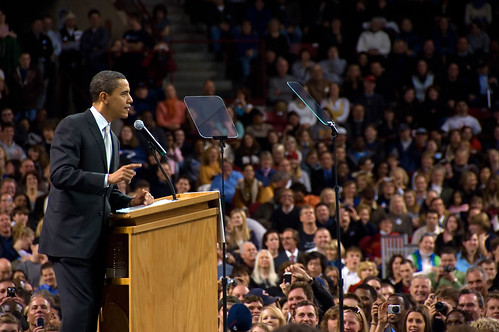
Let me express my thanks to the historic slate of candidates who accompanied me on this journey, and especially the one who traveled the farthest a champion for working Americans and an inspiration to my daughters and to yours - Hillary Rodham Clinton.
To President Clinton, who last night made the case for change as only he can make it, to Ted Kennedy, who embodies the spirit of service, and to the next Vice President of the United States, Joe Biden, I thank you.
I am grateful to finish this journey with one of the finest statesmen of our time, a man at ease with everyone from world leaders to the conductors on the Amtrak train he still takes home every night.
To the love of my life, our next First Lady, Michelle Obama, and to Sasha and Malia I love you so much, and I'm so proud of all of you.
Four years ago, I stood before you and told you my story of the brief union between a young man from Kenya and a young woman from Kansas who weren't well-off or well-known, but shared a belief that in America, their son could achieve whatever he put his mind to.
'Pursuing dreams'
It is that promise that has always set this country apart that through hard work and sacrifice, each of us can pursue our individual dreams but still come together as one American family, to ensure that the next generation can pursue their dreams as well.
That's why I stand here tonight.
Because for 232 years, at each moment when that promise was in jeopardy, ordinary men and women students and soldiers, farmers and teachers, nurses and janitors - found the courage to keep it alive.
We meet at one of those defining moments a moment when our nation is at war, our economy is in turmoil, and the American promise has been threatened once more.
Tonight, more Americans are out of work and more are working harder for less.
More of you have lost your homes and even more are watching your home values plummet.
More of you have cars you can't afford to drive, credit card bills you can't afford to pay, and tuition that's beyond your reach.
'Broken politics'
These challenges are not all of government's making.
But the failure to respond is a direct result of a broken politics in Washington and the failed policies of George W. Bush.
America, we are better than these last eight years. We are a better country than this.
This country is more decent than one where a woman in Ohio, on the brink of retirement, finds herself one illness away from disaster after a lifetime of hard work.
This country is more generous than one where a man in Indiana has to pack up the equipment he's worked on for 20 years and watch it shipped off to China, and then chokes up as he explains how he felt like a failure when he went home to tell his family the news.
We are more compassionate than a government that lets veterans sleep on our streets and families slide into poverty, that sits on its hands while a major American city drowns before our eyes.
Tonight, I say to the American people, to Democrats and Republicans and Independents across this great land, enough!
This moment, this election is our chance to keep, in the 21st century, the American promise alive.
Because next week, in Minnesota, the same party that brought you two terms of George Bush and Dick Cheney will ask this country for a third.
'Delivering change'
And we are here because we love this country too much to let the next four years look like the last eight.
On November 4th, we must stand up and say: "Eight is enough."
Now let there be no doubt. The Republican nominee, John McCain, has worn the uniform of our country with bravery and distinction, and for that we owe him our gratitude and respect.
And next week, well also hear about those occasions when he's broken with his party as evidence that he can deliver the change that we need.
But the record's clear: John McCain has voted with George Bush 90 per cent of the time.
Senator McCain likes to talk about judgement, but really, what does it say about your judgement when you think George Bush has been right more than 90 per cent of the time?..................Continues Below
**************************************************************
Read Related Post:
John McCain's acceptance speech as the Republican presidential nominee at the RNC
**************************************************************
I don't know about you, but I'm not ready to take a 10 per cent chance on change.
The truth is, on issue after issue that would make a difference in your lives on health care and education and the economy Senator McCain has been anything but independent.
'Americans' anxiety'
He said that our economy has made great progress under this president. He said that the fundamentals of the economy are strong.
And when one of his chief advisors the man who wrote his economic plan was talking about the anxiety Americans are feeling, he said that we were just suffering from a mental recession, and that we've become, and I quote, "a nation of whiners".
A "nation of whiners"?
Tell that to the proud auto workers at a Michigan plant who, after they found out it was closing, kept showing up every day and working as hard as ever, because they knew there were people who counted on the brakes that they made.
Tell that to the military families who shoulder their burdens silently as they watch their loved ones leave for their third or fourth or fifth tour of duty.
'No tax relief'
These are not whiners. They work hard and give back and keep going without complaint. These are the Americans that I know.
Now, I don't believe that Senator McCain doesnt care what's going on in the lives of Americans.
I just think he doesn't know.
Why else would he define middle-class as someone making under $5million a year?
How else could he propose hundreds of billions in tax breaks for big corporations and oil companies but not one penny of tax relief to more than 100 million Americans?
How else could he offer a health care plan that would actually tax people's benefits, or an education plan that would do nothing to help families pay for college, or a plan that would privatise Social Security and gamble your retirement?
It's not because John McCain doesn't care. It's because John McCain doesn't get it.
'Discredited philosophy'
For over two decades, he's subscribed to that old, discredited Republican philosophy, give more and more to those with the most and hope that prosperity trickles down to everyone else.
In Washington, they call this the Ownership Society, but what it really means is you're on your own.
Out of work? Tough luck.
No health care? The market will fix it.
Born into poverty? Pull yourself up by your own bootstraps even if you dont have boots.
You're on your own.
Well it's time for them to own their failure. It's time for us to change America.
You see, we Democrats have a very different measure of what constitutes progress in this country.
We measure progress by how many people can find a job that pays the mortgage, whether you can put a little extra money away at the end of each month so you can someday watch your child receive her college diploma.
'Dignity of work'
We measure progress in the 23 million new jobs that were created when Bill Clinton was president when the average American family saw its income go up $7,500 instead of down $2,000 like it has under George Bush.
We measure the strength of our economy not by the number of billionaires we have or the profits of the Fortune 500, but by whether someone with a good idea can take a risk and start a new business, or whether the waitress who lives on tips can take a day off to look after a sick kid without losing her job, an economy that honours the dignity of work.
The fundamentals we use to measure economic strength are whether we are living up to that fundamental promise that has made this country great a promise that is the only reason I am standing here tonight.
Because in the faces of those young veterans who come back from Iraq and Afghanistan, I see my grandfather, who signed up after Pearl Harbor, marched in Patton's Army, and was rewarded by a grateful nation with the chance to go to college on the GI Bill.
In the face of that young student who sleeps just three hours before working the night shift, I think about my mom, who raised my sister and me on her own while she worked and earned her degree, who once turned to food stamps but was still able to send us to the best schools in the country with the help of student loans and scholarships.
When I listen to another worker tell me that his factory has shut down, I remember all those men and women on the South Side of Chicago who I stood by and fought for two decades ago after the local steel plant closed.
And when I hear a woman talk about the difficulties of starting her own business, I think about my grandmother, who worked her way up from the secretarial pool to middle-management, despite years of being passed over for promotions because she was a woman.
She's the one who taught me about hard work. She's the one who put off buying a new car or a new dress for herself so that I could have a better life.
'My heroes'
She poured everything she had into me. And although she can no longer travel, I know that she's watching tonight, and that tonight is her night as well.
I don't know what kind of lives John McCain thinks that celebrities lead, but this has been mine.
These are my heroes.
Theirs are the stories that shaped me. And it is on their behalf that I intend to win this election and keep our promise alive as president of the United States.
What is that promise?
It's a promise that says each of us has the freedom to make of our own lives what we will, but that we also have the obligation to treat each other with dignity and respect.
It's a promise that says the market should reward drive and innovation and generate growth, but that businesses should live up to their responsibilities to create American jobs, look out for American workers, and play by the rules of the road.
Ours is a promise that says government cannot solve all our problems, but what it should do is that which we cannot do for ourselves, protect us from harm and provide every child a decent education, keep our water clean and our toys safe, invest in new schools and new roads and new science and technology.
Our government should work for us, not against us. It should help us, not hurt us.
Fundamental belief
It should ensure opportunity not just for those with the most money and influence, but for every American who's willing to work.
That's the promise of America, the idea that we are responsible for ourselves, but that we also rise or fall as one nation, the fundamental belief that I am my brother's keeper, I am my sisters keeper.
That's the promise we need to keep. That's the change we need right now. So let me spell out exactly what that change would mean if I am president.
Change means a tax code that doesn't reward the lobbyists who wrote it, but the American workers and small businesses who deserve it.
Unlike John McCain, I will stop giving tax breaks to corporations that ship jobs overseas, and I will start giving them to companies that create good jobs right here in America.
I will eliminate capital gains taxes for the small businesses and the start-ups that will create the high-wage, high-tech jobs of tomorrow.
I will cut taxes cut taxes for 95% of all working families. Because in an economy like this, the last thing we should do is raise taxes on the middle-class.
And for the sake of our economy, our security, and the future of our planet, I will set a clear goal as president: in 10 years, we will finally end our dependence on oil from the Middle East.
Oil addiction
Washington's been talking about our oil addiction for the last thirty years, and John McCain has been there for twenty-six of them.
In that time, he's said no to higher fuel-efficiency standards for cars, no to investments in renewable energy, no to renewable fuels.
And today, we import triple the amount of oil as the day that Senator McCain took office.
Now is the time to end this addiction, and to understand that drilling is a stop-gap measure, not a long-term solution. Not even close.
As president, I will tap our natural gas reserves, invest in clean coal technology, and find ways to safely harness nuclear power.
I'll help our auto companies re-tool, so that the fuel-efficient cars of the future are built right here in America.
I'll make it easier for the American people to afford these new cars.
And I'll invest 150 billion dollars over the next decade in affordable, renewable sources of energy wind power and solar power and the next generation of biofuels, an investment that will lead to new industries and five million new jobs that pay well and can't ever be outsourced.
'World-class' education
America, now is not the time for small plans.
Now is the time to finally meet our moral obligation to provide every child a world-class education, because it will take nothing less to compete in the global economy.
Michelle and I are only here tonight because we were given a chance at an education. And I will not settle for an America where some kids don't have that chance.
I'll invest in early childhood education. I'll recruit an army of new teachers, and pay them higher salaries and give them more support. And in exchange, I'll ask for higher standards and more accountability.
And we will keep our promise to every young American if you commit to serving your community or your country, we will make sure you can afford a college education.
Now is the time to finally keep the promise of affordable, accessible health care for every single American.
If you have health care, my plan will lower your premiums.
If you dont, you'll be able to get the same kind of coverage that members of Congress give themselves.
'Protect social security'
And as someone who watched my mother argue with insurance companies while she lay in bed dying of cancer, I will make certain those companies stop discriminating against those who are sick and need care the most.
Now is the time to help families with paid sick days and better family leave, because nobody in America should have to choose between keeping their jobs and caring for a sick child or ailing parent.
Now is the time to change our bankruptcy laws, so that your pensions are protected ahead of CEO bonuses, and the time to protect Social Security for future generations.
And now is the time to keep the promise of equal pay for an equal days work, because I want my daughters to have exactly the same opportunities as your sons.
Now, many of these plans will cost money, which is why I've laid out how I'll pay for every dime by closing corporate loopholes and tax havens that don't help America grow.
But I will also go through the federal budget, line by line, eliminating programs that no longer work and making the ones we do need work better and cost less because we cannot meet twenty-first century challenges with a twentieth century bureaucracy.
And Democrats, we must also admit that fulfilling America's promise will require more than just money.'
'Moral strength'
It will require a renewed sense of responsibility from each of us to recover what John F. Kennedy called our intellectual and moral strength.
Yes, government must lead on energy independence, but each of us must do our part to make our homes and businesses more efficient.
Yes, we must provide more ladders to success for young men who fall into lives of crime and despair.
But we must also admit that programs alone can't replace parents, that government can't turn off the television and make a child do her homework, that fathers must take more responsibility for providing the love and guidance their children need.
Individual responsibility and mutual responsibility, that's the essence of America's promise.
And just as we keep our keep our promise to the next generation here at home, so must we keep America's promise abroad.
If John McCain wants to have a debate about who has the temperament, and judgement, to serve as the next Commander-in-Chief, that's a debate I'm ready to have.
For while Senator McCain was turning his sights to Iraq just days after 9/11, I stood up and opposed this war, knowing that it would distract us from the real threats we face.
'Wallowing in deficits"
When John McCain said we could just muddle through in Afghanistan, I argued for more resources and more troops to finish the fight against the terrorists who actually attacked us on 9/11, and made clear that we must take out Osama bin Laden and his lieutenants if we have them in our sights.
John McCain likes to say that he'll follow bin Laden "to the Gates of Hell" but he won't even go to the cave where he lives.
And today, as my call for a time frame to remove our troops from Iraq has been echoed by the Iraqi government and even the Bush Administration, even after we learned that Iraq has a $79 billion surplus while we're wallowing in deficits, John McCain stands alone in his stubborn refusal to end a misguided war.
That's not the judgement we need. That wont keep America safe. We need a president who can face the threats of the future, not keep grasping at the ideas of the past.
You don't defeat a terrorist network that operates in eighty countries by occupying Iraq.
You don't protect Israel and deter Iran just by talking tough in Washington.
You can't truly stand up for Georgia when you've strained our oldest alliances.
'Bad strategy'
If John McCain wants to follow George Bush with more tough talk and bad strategy, that is his choice but it is not the change we need.
We are the party of Roosevelt. We are the party of Kennedy. So don't tell me that Democrats won't defend this country. Don't tell me that Democrats won't keep us safe.
The Bush-McCain foreign policy has squandered the legacy that generations of Americans - Democrats and Republicans have built, and we are here to restore that legacy.
As Commander-in-Chief, I will never hesitate to defend this nation, but I will only send our troops into harms way with a clear mission and a sacred commitment to give them the equipment they need in battle and the care and benefits they deserve when they come home.
I will end this war in Iraq responsibly, and finish the fight against al-Qaeda and the Taliban in Afghanistan.
I will rebuild our military to meet future conflicts.
But I will also renew the tough, direct diplomacy that can prevent Iran from obtaining nuclear weapons and curb Russian aggression.
I will build new partnerships to defeat the threats of the 21st century: terrorism and nuclear proliferation, poverty and genocide, climate change and disease.
Moral standing
And I will restore our moral standing, so that America is once again that last, best hope for all who are called to the cause of freedom, who long for lives of peace, and who yearn for a better future.
These are the policies I will pursue. And in the weeks ahead, I look forward to debating them with John McCain.
But what I will not do is suggest that the Senator takes his positions for political purposes.
Because one of the things that we have to change in our politics is the idea that people cannot disagree without
challenging each other's character and patriotism.
The times are too serious, the stakes are too high for this same partisan playbook.
So let us agree that patriotism has no party.
I love this country, and so do you, and so does John McCain.
'Not easy'
The men and women who serve in our battlefields may be Democrats and Republicans and Independents, but they have fought together and bled together and some died together under the same proud flag.
They have not served a Red America or a Blue America they have served the United States of America.
So I've got news for you, John McCain. We all put our country first.
America, our work will not be easy.
The challenges we face require tough choices, and Democrats as well as Republicans will need to cast off the worn-out ideas and politics of the past.
For part of what has been lost these past eight years can't just be measured by lost wages or bigger trade deficits.
What has also been lost is our sense of common purpose our sense of higher purpose.
And that's what we have to restore.
Gang violence
We may not agree on abortion, but surely we can agree on reducing the number of unwanted pregnancies in this country.
The reality of gun ownership may be different for hunters in rural Ohio than for those plagued by gang violence in Cleveland, but don't tell me we can't uphold the Second Amendment while keeping AK-47's out of the hands of criminals.
I know there are differences on same-sex marriage, but surely we can agree that our gay and lesbian brothers and sisters deserve to visit the person they love in the hospital and to live lives free of discrimination.
Passions fly on immigration, but I don't know anyone who benefits when a mother is separated from her infant child or an employer undercuts American wages by hiring illegal workers.
This too is part of America's promise, the promise of a democracy where we can find the strength and grace to bridge divides and unite in common effort.
I know there are those who dismiss such beliefs as happy talk.
They claim that our insistence on something larger, something firmer and more honest in our public life, is just a Trojan Horse for higher taxes and the abandonment of traditional values.
And that's to be expected.
'Empty promises'
Because if you don't have any fresh ideas, then you use stale tactics to scare the voters.
If you dont have a record to run on, then you paint your opponent as someone people should run from.
You make a big election about small things.
And you know what, it's worked before.
Because it feeds into the cynicism we all have about government.
When Washington doesn't work, all its promises seem empty.
If your hopes have been dashed again and again, then it's best to stop hoping, and settle for what you already know.
I get it. I realize that I am not the likeliest candidate for this office.
'Greatest risk'
I don't fit the typical pedigree, and I haven't spent my career in the halls of Washington.
But I stand before you tonight because all across America something is stirring.
What the nay-sayers don't understand is that this election has never been about me.
It's been about you.
For 18 long months, you have stood up, one by one, and said enough to the politics of the past.
You understand that in this election, the greatest risk we can take is to try the same old politics with the same old players and expect a different result.
You have shown what history teaches us that at defining moments like this one, the change we need doesn't come from Washington.
Change comes to Washington.
Change happens because the American people demand it because they rise up and insist on new ideas and new leadership, a new politics for a new time.
America, this is one of those moments.
I believe that as hard as it will be, the change we need is coming.
Because I've seen it. Because I've lived it.
Nuclear weapons
I've seen it in Illinois, when we provided health care to more children and moved more families from welfare to work.
I've seen it in Washington, when we worked across party lines to open up government and hold lobbyists more accountable, to give better care for our veterans and keep nuclear weapons out of terrorist hands.
And I've seen it in this campaign.
In the young people who voted for the first time, and in those who got involved again after a very long time.
In the Republicans who never thought they'd pick up a Democratic ballot, but did.
I've seen it in the workers who would rather cut their hours back a day than see their friends lose their jobs, in the soldiers who re-enlist after losing a limb, in the good neighbors who take a stranger in when a hurricane strikes and the floodwaters rise.
'Envy of the world'
This country of ours has more wealth than any nation, but that's not what makes us rich.
We have the most powerful military on Earth, but that's not what makes us strong. Our universities and our culture are the envy of the world, but thats not what keeps the world coming to our shores.
Instead, it is that American spirit that American promise that pushes us forward even when the path is uncertain, that binds us together in spite of our differences, that makes us fix our eye not on what is seen, but what is unseen, that better place around the bend.
That promise is our greatest inheritance.
It's a promise I make to my daughters when I tuck them in at night, and a promise that you make to yours, a promise that has led immigrants to cross oceans and pioneers to travel west, a promise that led workers to picket lines, and women to reach for the ballot.
And it is that promise that 45 years ago today, brought Americans from every corner of this land to stand together on a Mall in Washington, before Lincoln's Memorial, and hear a young preacher from Georgia speak of his dream.
The men and women who gathered there could've heard many things.
They could've heard words of anger and discord. They could've been told to succumb to the fear and frustration of so many dreams deferred.
But what the people heard instead, people of every creed and colour, from every walk of life is that in America, our destiny is inextricably linked.
That together, our dreams can be one.
We cannot walk alone, the preacher cried. And as we walk, we must make the pledge that we shall always march ahead.
'Words of scripture'
We cannot turn back.
America, we cannot turn back. Not with so much work to be done.
Not with so many children to educate, and so many veterans to care for. Not with an economy to fix and cities to rebuild and farms to save.
Not with so many families to protect and so many lives to mend.
America, we cannot turn back. We cannot walk alone.
At this moment, in this election, we must pledge once more to march into the future.
Let us keep that promise, that American promise and in the words of Scripture hold firmly, without wavering, to the hope that we confess.
Thank you, God Bless you, and God Bless the United States of America.

Thursday, September 4, 2008
Barack Obama's historic nomination full speech to the Democratic National Convention in Denver

Monday, August 18, 2008
Politics: "Obama Is Here - McCain don't belong in ANY chair unless he's paralyzed"
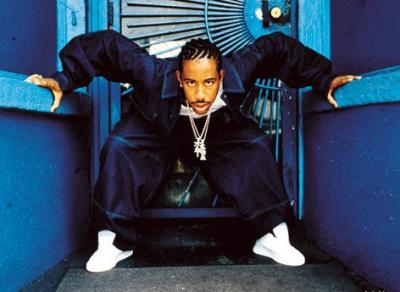
Barack Obama's campaign has already denounced the song and lyrics.
Below are the lyrics to Ludacris's song :
I'm back on it like I just signed my record deal
Yeah the best is here, the Bentley Coup paint is dripping wet, it got sex appeal
Never should have hated
You never should've doubted him
With a slot in the president's iPod Obama shattered 'em
Said I handled his biz and I'm one of his favorite rappers
Well give Luda a special pardon if I'm ever in the slammer
Better yet put him in office, make me your vice president
Hillary hated on you, so that bitch is irrelevant
Jesse talking slick and apologizing for what?
If you said it then you meant it how you want it have a gut!
And all you other politicians trying to hate on my man,
watch us win a majority vote in every state on my man
You can't stop what's bout to happen, we bout to make history
The first black president is destined and it's meant to be
The threats ain't fazing us, the nooses or the jokes
So get off your ass, black people, it's time to get out and vote!
Paint the White House black and I'm sure that's got 'em terrified
McCain don't belong in any chair unless he's paralyzed
Yeah I said it cause Bush is mentally handicapped
Ball up all of his speeches and I throw 'em like candy wrap
'cause what you talking I hear nothing even relevant
and you the worst of all 43 presidents
Get out and vote or the end will be near
The world is ready for change because Obama is here!
'cause Obama is here
The world is ready for change because Obama is here!
Thursday, August 2, 2007
United States of Africa: Libya is in Africa but not African

In the recent Accra Summit, nine countries from Northern Africa came to the meeting armed with a charter that fronted the forming of a one- government Africa. Led by Muammar Gaddafi of Libya, they demanded the immediate formation of the United States of Africa. They said that 40 years of independence had proved African leaders to be greedy, selfish and self-proclaimed gods over their countries. This, they said, had smothered Kwame Nkrumah’s dream of a united Africa.
The 1964 Cairo impasse emanated from a sharp difference between the late Julius Nyerere of Tanzania and President Kwame Nkrumah of Ghana over modalities that would lead to Africa’s unity. Nkrumah, like Gaddafi, wanted a one-government Africa to be formed right away and branded gradualist proponents as colonial puppets that were not out to offer any good to Africa.
Nyerere stuck to the gradualist approach. He argued that this would create room for African countries to study, understand and bond with each other before amalgamating. The disagreement, which almost went personal saw Nyerere’s camp win at the end of the summit. However, 45 years down the line, African countries are still wandering in the wilderness in their bid to enter Canaan.
I hold nothing personal against Gaddafi. I however differ with the manner in which he advanced his agenda. Who sent the nine countries to present the one-government Africa charter? Did the AU Secretariat have prior knowledge? Why were the nine countries basically Arab? Who is Gaddafi in the AU? Is Northern Africa Africa’s spokesman?
I am no racist, but it is true that Arabs of North Africa relate with Africans the same way the Boers relate with Africans in South Africa. That is why their allegiance with the AU is suspect. They can’t serve the AU and Arab League at the same time because blood is thicker than water.
The Arabs invaded and captured Northern Africa around 639 BC. To date, they dominate Egypt, Libya, Sudan, Algeria, Tunisia and Morocco. Before the invasion, North Africa was full of black Africans. The pyramids in Egypt were built by black Africans. Africa’s history is full of Arabs and Europeans enslaving, exploiting and humiliating the Africans. This suffering has made Africans to seek their identity.
Pan Africanism was begun by descendants of black Americans who were sold as slaves around the 16th century. The bitterness of slavery cemented them with their fellow blacks all over the world. Pan africanism found consummation in the 1945 Manchester Pan Africa Congress that declared that all Africans unite. This unity is akin to Pan Arabian unity and Arab nationalism that recently carried a charter to the Accra meeting.
African Arabs never regard themselves as Africans but rather as Arabs living in Africa. If they don’t change this perspective, Africa will never unite. This stand is evident in the late Gamel Abdel Nasser’s sentiments in Philosophy of the Revolution that “we live in Africa but we are not Africans.”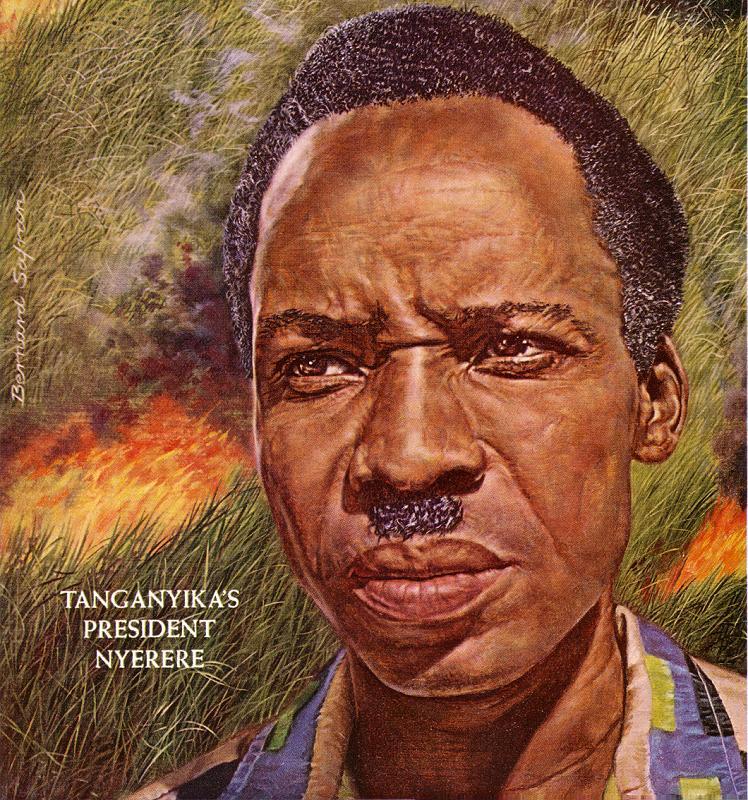
The Arab league is out to front the Arab agenda through the AU over black Africans. The same Gaddafi who fronted for a united Africa in Accra, has been on the front line destabilizing Mali, Chad and Niger with a view of bagging them into the Arab League. Gaddafi armed Dictator Idi Amin of Uganda against Tanzania arguing that he was aiding a Muslim nation against a non Muslim one. In Darfur and Mauritania, African ‘Arab’rulers are chasing black Africans away from their own land and bringing Arabs to take their place. Secret slavery is happening in Mauritania. Just recently, General Hassan of Sudan told the military: “we neither want to see these slaves (blacks) in Sudan nor need them. What we need is their land.”
If this is not neocolonialism, what is it? With such sentiments, how can we have a united Africa? President Kikwete was right in deflating Gaddafi’s agenda. Africans should be wary of hidden maneuvers out to prey on their resources and sovereignty in the name of unity.
Monday, July 30, 2007
Experts Trade Views on US of Africa with Benin Mwangi
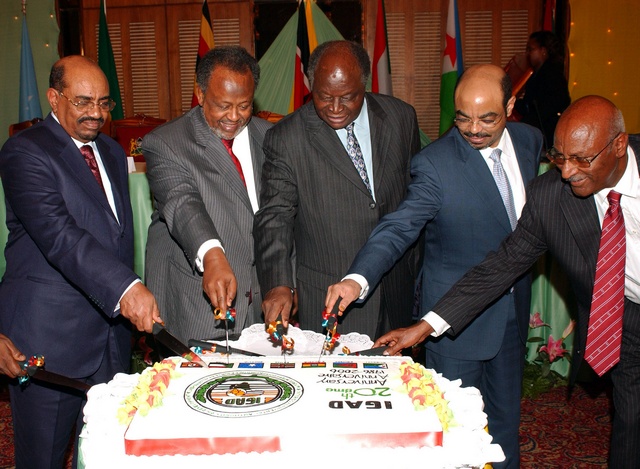
But underneath this, it should also be said that a more united continent could have the potential to bring about almost unfathomable macro economic benefit to certain areas and sectors on the continent. Believe it or not, just prior to the 9th Assembly of African Union Heads of State, I spoke with several experts on the subject of business across African borders and I believe that they bring some unique and tremendous insights to this topic.
One of the many people whose ideas on this topic have helped to shape mine was East Africa America Business Council Chairman and official Liaison of the East Africa Community, Mr. Patrick Ayota. I asked him, what did he think about the idea of African countries removing their borders all together and could there be any benefit to doing this and here's what he had to say,
"A more connected Africa would reduce the existing barriers that prevent African nations from doing more business with one another. Also, it could reduce costs. However, it is not necessary to have a single president for such a union to work. Here's what could work:
Creating a highway infrastructure linking the the countries together.
Removing visa requirements for members of the union
Creating a common market He goes on to add, "On a smaller scale this has largely already done by the East Africa Community (EAC). There is now a single entity in the EAC that licenses companies moving products between Uganda, Kenya, and Tanzania. This means that a Ugandan company can hire a Tanzanian employee and offer the same benefits to that employee that a Ugandan employee would receive. Also, Mr. Ayota illustrates countries working out there differences, "because Kenya has a stronger economy than Uganda and Tanzania, it has agreed to allow its neighbors to temporarily impose small tariffs on Kenyan goods. While Kenya has removed tariffs on goods from Tanzania and Uganda."What Mr. Ayota mentioned, as far as that cooperation between the East African nations is something that you don't often hear about coming from neighboring states on the continent, however this shows that it does and can happen. Of course, it has not always been this way between the three countries that he mentioned and it is in fact the result of an amazing amount of time, hard work, and diplomacy between the three nations. But, I believe that this is exactly what we need to see happen in order to make this discussion more practical. And I would think that it must happen, for a number of reasons. But primarily because today's voters on the continent are a lot more savvy than they were just one generation ago. Before they agree to go along with just any suggestion, my observation is that it would be better to demonstrate some of the benefits first. And isn't that the case around the globe? So, I agree with Mr. Ayota, before any serious thoughts of unifying all or a large part of the continent under one rule, there must be more connectedness on the basic items-like standardized educational systems with continental accreditation, looser tariffs, free movement of nationals across borders, better intra-roadways, communication systems, and a stronger system to support and document investment from one border to another. However, with the rise of the continent's regional economic blocks these things are slowly becoming materialize within smaller regions on the continent
I also had the pleasure of speaking with an investment researcher from the world acclaimed Barron's , Mr. Ryan Shen- Hoover. I asked him roughly the same question that I asked Mr. Ayota and Ryan's response was focused more along the lines of stock markets across the African continent and what these stock markets might look like if they were merged into one market.
Here's what he says,
"In brief, I believe a continent-wide stock market would be a welcome development for all involved. It would greatly lessen the difficulty of opening trading accounts in a dozen or so different countries and therefore would be great for any investor seeking exposure to more than one country. It would likely also have the effect of unlocking value in some companies that are listed in markets that trade infrequently (e.g. Swaziland, Ghana, Malawi) and could have the opposite effect in some of Africa's more overheated markets ( e.g. Nigeria and Kenya).So, how would a common stock exchange be brought about? There are a couple ways it might happen.
One way would be for all countries to sit down and hammer out the structure of a totally new market. They would agree on listing and reporting requirements, trading rules, location, etc. One obstacle I see to this is that most countries take a degree of pride in running their own national stock market. It would take a lot of political will to dissolve them in favor of one continent-wide market.
The other way to achieve a common market is more organic. Already in East Africa we are seeing Kenyan companies trade on not only the Nairobi Stock Exchange, but the Ugandan and Tanzanian exchanges, too. This is called cross-listing. Some other companies cross-list on the Johannesburg and Namibian stock exchanges. If one of the big exchanges (perhaps Nigeria, Kenya, or South Africa's) would actively encourage cross-listings, we could see a common market develop quite quickly. And each country could continue to run its own national market if it wished to do so."
I like Mr. Shen-Hoover's notion of voluntary participation on the part of African stock markets, whereby exchanges in different across different African borders can decide whether to cross list based upon the perceived risk or reward, rather than having the idea imposed on them. This to me would seem like more of a natural course to the continent finding that ever elusive unity that the founding fathers of the AU through the Organization of African Unity dreamt about only one generation ago.
So we said all of this to say what? Well, what we are getting at is that like Mr. Ayota says it is possible to harness the economic power of a unified continent without necessarily having all the continent's nearly 1 billion human inhabitants under a single national banner. Furthermore, the steps mentioned here need not be mandated. In fact, mandates seem to stir apprehension within voters. Instead, a more gradual and laizzez faire approach might be the way to go about this. One more thing that I failed[Photo] to mention earlier is that the African Union decided to support the further development of the continent's 14 regional integration groupings-I say that if nothing else ever comes out of that 9th Assembly of the African Union Heads of State this development in itself is major. Although, I wouldn't have minded hearing the AU discuss how to fully harness the power of the informal economies existing in different regions of the continent.
Wednesday, July 11, 2007
Is the United States of Africa already here?

The proposal to officially create a United States of Africa may not have come at a better time than now when international trade is dictating the pace of development thanks to technological innovation. You may not have noticed but recent trends indicate that the United States of Africa is already here. Through various communication technologies, Africa has transformed into a large business unit.
Over the past 5 years, the cost of communication in Africa has come down to manageable levels providing a wide menu over what communication technology to use.
Cost has been a major driving force over the choices made with an aim of bridging the digital divide to support business growth in the continent. All this is despite the reduction in regulatory barriers that were pushing communication prices to exorbitantly high prices in a larger chunk of the continent.
In a majority of countries where governments have deregulated information and communication sectors, considerable development has been made in the various industries thus enhancing regional and global trade. For example countries such as Kenya and South Africa are in the process of laying cables that would bring high-speed connectivity allowing the continent to engage in e-commerce, explore new markets and lower the cost of international bandwidth. Other countries are turning to Voice over Internet Protocol (VoIP) as an affordable alternative to bypass expensive conventional telephone systems, for long distance calls. The International Telecommunication Union's (ITU) annual report indicates that outbound VoIP increased to more than 2 billion minutes in the last one year. African countries have also chosen to embrace ITU endorsed switchover to terrestrial digital broadcasting for television and radio to enable high quality real-time exchange of information and cultures by 2015.
Mobile telephony has also been on the increase in the continent and is showing higher prospects for further growth supported mainly by increased need for global business communication. Mobile telephone service providers are embracing regional integration by converging their operations into single seamless networks ostensibly to improve access and lower the overall cost of international roaming. A good example is Celtel, whose operations in East and Central Africa are now seamlessly converged into one network that allows international roaming at existing local rates. Armed with your mobile telephone and a laptop, you can work from virtually anywhere.
Banking and other financial services are on the growth path with indigenous African banks opening up branches in regions where they were not allowed to operate before. For instance, Standard bank South Africa recently merged with CFC Bank Kenya to support their growth in East Africa. Foreign direct investments have also been on the increase within the continent thanks to technological innovation that allows all operations to be centralised.
Looking at history, various regional blocking in Africa have failed to meet their mandate due to various reasons mostly political. Only trade has been self-sustaining because of its direct influence in economic development. If the idea of creating a United States of Africa is to create wealth, then we may argue that it is already here. What Africa needs is to strengthen existing structures, invest more in ICT and establish structures that support international trade and wealth creation through value addition.

