By James Bone, Francis Elliott and Jonathan Clayton
Times online
With just a week to go before Zimbabwe’s run-off elections – and with the body count growing – President Mugabe has been warned that he could be hauled before the International Criminal Court in The Hague over the atrocities inflicted on his opponents.
A key Western diplomat, speaking yesterday on condition of anonymity, said: “He needs to know he is moments away from an ICC indictment.”
Twelve bodies of activists, most of them showing signs of torture, were found across Zimbabwe yesterday.
In New York, Condoleezza Rice, the US Secretary of State, convened a crisis meeting at the United Nations. She said: “By its actions, the Mugabe regime has given up any pretence that the June 27 elections will be allowed to proceed in a free and fair manner. We have reached the point where stronger international action is needed.”
Also yesterday, Morgan Tsvangirai, the leader of the opposition party Movement for Democratic Change, was denied a passport, and his deputy, Tendai Biti, was charged with subversion and election rigging – offences that carry the death penalty.
African leaders began to desert Mr Mugabe. A day after President Mbeki of South Africa failed to make any headway in face-to-face talks with President Mugabe, neighbouring states delivered their strongest condemnation yet.
Bernard Membe, the Tanzanian Foreign Minister, said: “There is every sign that these elections will never be free or fair.” He said that he and the foreign ministers of Swaziland and Angola – the peace and security troika from the Southern African Development Community (SADC) – would write to their presidents to “do something urgently” to save Zimbabwe.
A senior SADC diplomatic source said: “The last allies he has in the world – SADC – are now saying they have had enough and this disgrace cannot go on. His obduracy has united them against him. They are trying to make him realise that a poll victory is no victory.”
South Africa, which has advocated “quiet diplomacy”, snubbed Dr Rice’s efforts. Nkosazana Dlamini Zuma, the Foreign Minister, skipped the UN meeting on Zimbabwe but attended a separate meeting with Dr Rice on sexual violence. They met briefly. Dr Rice said that she and Ms Zuma wanted the same thing for Zimbabwe.
Any attempt to bring Mr Mugabe before the court in The Hague faces formidable obstacles. The ICC has charged 11 Africans – two from Sudan, four from Uganda, one from the Central African Republic and four from the Democratic Republic of the Congo – but it does not have jurisdiction over Zimbabwe. It would have to be referred to the court by the 15-nation UN Security Council.
The Security Council is so split that the US, holding the presidency this month, is having trouble even holding a briefing on the violence. US diplomats may have to force a procedural vote to get Zimbabwe on to the agenda because of resistance from council members such as South Africa, Russia, China, Vietnam, Indonesia and Libya.
The US does not itself recognise the ICC, although it allowed the council to refer the Darfur crisis to the court. An official told The Times that the Bush Administration would be reluctant to accept another “carve-out” to the ICC by referring Zimbabwe.
The Zimbabwean authorities are outraged by any suggestion that Mr Mugabe might face an international court. Florence Ziyambi, the prosecutor, cited the threat of international prosecution as one of the grounds for charging Mr Biti. “They are alleging that the President is a criminal since they want to take him to The Hague,” she told the court. Whatever happens on the 27th, Mu-Garbage must be stopped.

Friday, June 20, 2008
Time to End Mu-Garbage tyranny in Zimbabwe

Wednesday, June 18, 2008
The Mediocrity of African Leadership
By Richard Dowden (TIME)
Africa's colonial history has left its rulers shy of external scrutiny, so an international gathering of political and business leaders in Cape Town from June 4-6 seemed to promise little more than platitudes. The annual meetings of the World Economic Forum for Africa have often conveyed the impression that Africa's only problem is its image. Rebrand the continent as a success, the message goes, and all will be well. But this year the rising cost of food, Africa's energy deficiency and its projected failure to meet the Millennium Development Goals forced a deeper conclusion: Africa has a serious leadership deficiency. A new wave of ambitious, critical and perhaps more open politicians are clamoring for change.
The shift in tone was clear from the opening session, which featured a clutch of politicians more used to public deference. Presidents Thabo Mbeki of South Africa and John Kuffour of Ghana are close to stepping down, and their power is waning. They were joined on the podium by Raila Odinga, who has fought the political establishment from birth, and in March was appointed Prime Minister of Kenya following a disputed election. Odinga laid into his fellow leaders for keeping quiet about another disputed election earlier this year — for Zimbabwe's presidency. Robert Mugabe, the incumbent widely believed to have been defeated, has not yet released the results.
Odinga also blamed the continent's ethnic conflicts on the "mediocrity of African leadership." Even the mild-mannered President of Burundi, Pierre Nkurunziza, struck a sharp note, hitting out at the practice, still widespread among African men, of taking multiple wives and siring hordes of children. Jacob Zuma, tipped to be the next President of South Africa, listened calmly. He boasts four wives and at least 18 children.
For some participants, the focus on Africa's — and their own — failings was distinctly uncomfortable. Malawi's President, Bingu wa Mutharika, urged African leaders to learn to share power with political opponents — notwithstanding the fact that he recently arrested six opposition party members. Mbeki, a focus for criticism about the failure to deal with the crisis in Zimbabwe, blandly insisted that most of Africa was "evolving well."
Hopes that Zuma might provide stronger leadership on pivotal issues for the continent were not boosted by his performance at the conference. He called food prices "a time bomb" that governments could do little about — a limp response when 30 million Africans face hardship if more food is not grown and sold at affordable prices.
But the crisis also brings with it an opportunity — for Africa to grow and sell more food for domestic consumption and export. Namanga Ngongi, president of the Nairobi-based Alliance for a Green Revolution in Africa, told delegates that Africa could follow Asia's example and achieve a dramatic increase in agricultural output. That's true, but only 4% of national budgets are currently spent on agriculture, and investment is hampered by precolonial land rights that still prevail in most of sub-Saharan Africa. Meanwhile the cost of fertilizer has risen even more dramatically than the cost of fuel, leaving farmers facing a triple whammy: oil- and food-price rises, plus a lack of credit. Aliko Dangote, a Nigerian businessman and Africa's richest man, said small farmers are not supported by governments. "Farmers would have to grow gold" to make a profit, he commented.
Nobody disagreed. There's wide recognition that more investment, fertilizer, better strains of seeds and better storage and transport are all essential to Africa's subsistence farmers. Yet in Africa, there's a perennial gap between knowing what needs to be done and doing it. China's venture into Africa has raised interest in business opportunities there. But many prospective investors are still put off by poor infrastructure. Several African countries, including South Africa, endure daily power cuts because of inadequate generating capacity.
Governments have let such problems persist. Africa's burgeoning middle class may prove less patient. At the Cape Town meeting, members of this class expressed a common vision of what needs to be done — and a sense of urgency, too. In the past, entrepreneurs and other professionals largely avoided politics. Now they are increasingly influencing policy and demanding better leadership. Their impact, and their importance to Africa’s future, hasn’t gone unnoticed. A European delegate with substantial African interests was asked which African investments he'd recommend. He replied: "Anything that supports the new middle class."
Richard Dowden is director of the Royal African Society. His book, Africa: Altered States, Ordinary Miracles, will be published in September

Friday, May 30, 2008
Is Thabo Mbeki the source of South Africa Xenophobia?

The seemingly well orchestrated xenophobic attacks (pitting locals against hapless “black foreigners” in the township of Alexandra, north of Johannesburg) has left many injured, dead or displaced after they were forcefully evicted and their houses destroyed. The violence has shown no signs of abating and has been spreading fast to the city center and across the Gauteng region. Reports indicate an increase of violence against women and children who have been left to bear the brunt of this insensitive fervor. According to Medecins Sans Frontieres (MSF) which has treated many victims of live bullets, beatings and rape, it is a classic refugee situation that will eventually overwhelm the authorities. South African police were stretched so thin that the military had to be deployed to help quell the situation. Why the violence?
It is particularly shameful for the "Rainbow Nation" considering its past record on human rights abuses and democracy. South Africa’s president, Thabo Mbeki knows that what is happening in today is a replay of the situation in Zimbabwe some 10 years ago when Comrade Robert Mugabe began a controversial land redistribution program that saw many commercial farms seized from white farmers and turned over to blacks sending its economy into a spin. Zimbabwe has never recovered. The only difference comes in who is executing the anti “rest of Africa” policy in which poor South Africans are being used by hidden forces out to gain with the exit of black immigrants. It is therefore not strange that such violence can occur at a time when the country is preparing to host the 2010 FIFA World Cup and Mbeki ousted from the ANC leadership. Many hoped that the World Cup would bring new opportunities for the entire continent. But it seems South Africa is not ready to share such glory with the “rest of Africa”. It took days of violence for authorities to notice its magnitude. The statement from President Mbeki that “Citizens from other countries on the African continent and beyond are as human as we are and deserve to be treated with respect and dignity", was just that, a statement…a mere rhetoric.
“It has to do with two things. First of all there is resentment against the same person being at the helm, which is good for democracy. And also Mr. Mbeki had a distance between himself and the general population, and Mr. Zuma on the other hand is a very populist kind of a speaker and has closed relations with people on the ground. I think the two balance each other. It’s not necessarily a rejection of Mr. Mbeki’s policies. It is a rejection of Mr. Mbeki’s personality,” he said.
Pakerndorf described Mbeki as a foreign educated South African while Zuma educated himself while serving jail time for the ANC.(Continues below)
*********************************************************
Top posts in May 2008:
1. South Africa Violence: Why is Brother Fighting Brother?
2. Africa Day is not Socialism Day!
3. Keen on business, China is yet to flex its formidable military muscle in Africa
4. Top secrets: Gaddafi plotted to bomb Kenya
5. Democracy, reforms can end fear of instability
6. Kenya tea loses its flavor in Pakistan
NOTE:
Are the Xenophobic attacks in South Africa Justified?
(Give you view on the violence in South Africa in the poll at the top of this page)
*********************************************************
“If you go back in history, Mr. Mbeki left the country when he was still a teenager and spent most of his time in Europe and latter part in Lusaka, Zambia and hasn’t had a real connection with people on the ground or ordinary South Africans” Pakerndorf said.
He said the fact that Mbeki turned South Africa’s economy around matters little to ordinary South Africans.
“What is interesting and important is that people on the ground actually expect that their lives should be better and could be better. They see their fellow black South Africans moving ahead, some of them becoming millionaires, moving into brick houses. And I think that’s part of what you see happening here. People on the ground are simply saying no more of the same. We want to be part of the economy,” Pakerndorf said.
Since the apartheid era, many locals have slipped into abject poverty despite the newly expanded freedom that has done little to improve the quality of life of many in the rainbow nation. However, all blame should be targeted towards the South African government and not the immigrants many of whom are playing a positive role in the country’s development. The South African Xenophobia began with the end of apartheid, NOT yesterday like we are being made to believe. Granted, there are many South Africans who live in “the rest of Africa” but it would be despicable if they too were to undergo the same wrath.
CLICK HERE TO READ THE REST OF THE BLOG
Japan has come late to this second scramble for Africa—and knows it

THE copper is used in computers. The nickel is for batteries. Tungsten is used to fortify steel for cars. Japan buys much of its rare metal from China to feed its electronics and car industries. But as booming China has begun to close the spigot to safeguard its own supplies, Japan, the world's second biggest economy, has been forced to look elsewhere for an alternative source—in Africa.
On May 28th it hosted the Tokyo International Conference on African Development, a quadrennial event since 1993. About 40 African heads of state or government attended. Japan's prime minister, Yasuo Fukuda, promised to meet each one individually, as well as Bono, a pop singer, without whom no such gathering on Africa is complete. (Continues below)
*********************************************************
Also Read: Is Africa Milked Dry In the Name of Aid?
Top posts in May 2008:
1. South Africa Violence: Why is Brother Fighting Brother?
2. Africa Day is not Socialism Day!
3. Keen on business, China is yet to flex its formidable military muscle in Africa
4. Top secrets: Gaddafi plotted to bomb Kenya
5. Democracy, reforms can end fear of instability
6. Kenya tea loses its flavor in Pakistan
NOTE:
Are the Xenophobic attacks in South Africa Justified?
(Give you view on the violence in South Africa in the poll at the top of this page)
*********************************************************
But whereas in previous meetings aid topped the agenda, this time it has been all about the hunt for natural resources—with Africa's best interests at heart, of course. “If we are able to utilise Africa's plentiful resources more fully by harnessing Japan's technologies,” Mr Fukuda said, “this will surely be a major trigger for growth and without a doubt benefit Africa.”
This has become a familiar refrain from the leaders of Asia's other expanding economies. Japan is following firmly in the footsteps of China and India, both of which have hosted lavish African summits in the past 18 months, both of them keen to buy Africa's oil and metals.
Like the others, Japan is offering sweeteners to make itself a saucier commercial partner. This week it pledged to double aid to Africa by 2012, to $3.4 billion. It will also provide up to $4 billion in low-interest rate loans, which means easing its rules against lending to countries that have previously received debt relief.
Japanese officials stress that all this comes with no strings attached (except perhaps Africa's support for a permanent Japanese seat in the UN Security Council), a not-too-subtle hint that the country hopes to compete on an equal footing with China. Its loans are never linked to improvements in governance or human rights, unlike many of those from Europe, which hosted its own Africa summit in Portugal last December, or America. This reflects the fact that Japan has come late to this second scramble for Africa—and knows it.
Wednesday, May 28, 2008
Is Africa Milked Dry In the Name of Aid?

As Africa heads converge in Japan for the Tokyo International Conference on African Development (TICAD), it is urgent that we reflect on African interests. We already have had Sino-Africa, Euro-Africa, Indo-Africa and now TICAD. The most common denominator in all these is aid.
During an International Seminar of Aid Effectiveness which took place in Kenya recently, it was reported that Mr. Kilonntsi Mporogomyi a Tanzanian Member of Parliament who is also a member of NEPAD Contact Group of African Parliamentarians mentioned that some donors are also engaged in corruption that paralyzes Africa’s economy.
These donors have always attached unrealistic aid conditions, for instance the consultancies and tendering are usually done by the companies from donor countries which subject most recipient countries to grinding poverty as half of the aid is consumed by such companies. (Continues below)
*********************************************************
Top posts this month:
1. South Africa Violence: Why is Brother Fighting Brother?
2. Africa Day is not Socialism Day!
3. Keen on business, China is yet to flex its formidable military muscle in Africa
4. Top secrets: Gaddafi plotted to bomb Kenya
5. Democracy, reforms can end fear of instability
6. Kenya tea loses its flavor in Pakistan
NOTE:
Are the Xenophobic attacks in South Africa Justified?
(Give you view on the violence in South Africa in the poll at the top of this page)
*********************************************************
These donors allegedly meet our government ministers in exclusive hotels where they sign agreements without scrutinizing the documents. Most of these binding statements have been favoring donors and not Africans. Such unrealistic moves should be avoided as such donors need to be censored first. Why milk a continent dry in the name of aid?
Most African governments have executive sweeping powers on international and bilateral economic engagement leaving no room for independent evaluation of aid use for audit purposes. The donors use such powers to secretly meddle with our economies. Nothing regarding a country should be signed in an exclusive setting as this threatens transparency which we are working so hard to achieve.
When shall Africa host a frank intra-Africa summit to strategize on how to exploit our resources to generate income?
CLICK HERE TO READ THE REST OF THE BLOG
Wednesday, May 14, 2008
Africa Day is not Socialism Day!
By James Shikwati
African Executive
Talk about Africa Day and the image that comes to peoples' minds is music, drums, dancing and food! In the 2005 celebrations, I was a guest to African friends in Muscat Oman, and they requested that I should show case a 'thinking Africa' as opposed to the traditional dancing and drunk Africa!
Every year, Africans mark May 25th as an official Africa Liberation day. The date is celebrated to push for an onward progress on the liberation movement and symbolize the determination of the people of Africa to free themselves from foreign domination and exploitation. A casual observation of many groups that celebrate this great day reveals that we are still entrenched in the mindset of entitlement - the belief that some other entity owes us, due to past misdeeds. Not that we are not owed- but the question is: should we put all our focus on what we are owed?
It will be difficult to effectively follow up what we are owed if we constantly stand on the international streets with a begging bowl. Entitled or not, we must build our economic muscle. This in my view, cannot be achieved through socialism where everyone is expected to be equal to everyone else. We cannot build our economic muscle by putting too much trust in our leadership who preach socialism (for populist purposes) while practicing what Hon. Prof. Anyang' Nyong'o refers to as 'parasitic capitalism!'
Continues Below
************************************************************************
Also Read: Is America double faced?
Who’d think, the US, all-time-human-right enforcer, would collude with thieves to rob the continent that’s already poor thanks to colonialism?
************************************************************************
Guess who is holding your government hostage? Isn't it some freedom fighter elite, or friend and/or relative of the same who has been supplying biro pens, papers, chairs and fuel to the government? New leadership and new thinking have been thwarted because the 'parasitic capitalist' cannot fathom a world where he/she doesn't supply the poor African government with biro pens! Whereas capitalists create, parasites drain the system. We do not have enough of the capitalists on our continent.
Since independence, our elites have been vilifying capitalism in Africa. Unknown to them - it is purely the death of capitalism in Africa that has made foreigners to continue dominating us. That is why we are unable to exploit our subsurface wealth. Whereas capitalists see people as a resource and market; we choose to view our population as a burden; where capitalists engage in creative economy to earn a living; we simply dance and cry off our frustrations. Clearly, we must change the way we celebrate our Africa Day and turn it into an African open day for trade, travel and cultural exchange.
Our problems and challenges are of our own making: talk of press freedom, bungled elections, food crisis...the list is endless. Listen. Journalist Robert Mukombozi is deported from Rwanda; Andrew Mwenda is arrested in Uganda and his newspaper The Independence impounded. Zimbabwe joins the Kenyan queue on vote tallying fiasco. Guerilla war rages in Congo and Northern Uganda; Darfur is on fire and over 300 million Africans might starve due to ongoing food crisis. The old political order has refused to give way across the continent. Why did the African nationalism experiment collapse?
The post election violence in Kenya brought to the fore the fragile nature of our nationhood. Ethnic equations became so glaring that 'born - city' residents suddenly found themselves digging for identity. Matters were made worse for inter-ethnic marriages where groups suddenly put pressure on individuals to retreat to their ethnic safe havens.
Over 44 years of independence for most African countries and the political leadership has failed to deliver nationhood and Pan Africanism. An aerial view of Africa, especially Sub-Sahara Africa, reveals a leadership faced with double political and economic systems. Colonialism succeeded in driving native political systems underground but never extinguished them - what was in the traditional times an element of communities paying homage to the king through gifts was converted to the modern king (presidency) simply dipping their hands into the modern kitty of tax payers and donor funds. It is the kings of today who dish out to cronies.
The traditional utilitarian economy (hand to mouth) thrives among the masses while the African leadership leapfrogged to global economic system (saving and investments). It seems to me that the political leadership might well be privy to some feeling that their constituents do not need roads and other basic infrastructure as long as they can get a meal in a day!
African people have not been inspired by their leadership to seek higher goals. That explains in part the calamitous consequences the few Africans who seek to inspire go through. Why on earth would a Pan African leader deport an African journalist, detain others or raid media houses if he/she really stood for a brighter future for Africa? Why would simple summation of polls become very difficult for modern day Africa equipped with calculators and computers? "Son, you have no idea. A lot is at stake - the imperialists are using opposition elements to destroy Africa. That is why we must clamp down on their agents!" an African leader whispered to my ear. Pray tell – if the logic of imperialists is true, what type of soldiers do our African leaders wish to present to the war front? Sick, emaciated, ill informed, poor, tribal, and already mutinous soldiers!
Africa is too important to be left to the political leadership. Each of us must take responsibility to push our leadership to allow for openness on the way they run matters of state and government. We must be on the frontline to excite and incite our farmers to produce enough to feed the continent and engage in business. We should creatively merge the modern and the traditional to build a new Africa. We should not celebrate leaders who steal; rather let us produce so as to reward the best among us. Talk on fight against imperialism (if such a fight indeed exists) must provide reasoned strategy on how ordinary Africans can productively participate so as to avoid individuals enriching themselves by riding on the plight of the poor.
Open up Africa for business; free Africans to engage in business. Let African sons and daughters speak and move freely on the continent; generate a constituency of wealthy and well informed Africans - and this is achievable only through an open mind. A freed African mind is the best weapon one can use against imperialists!
Mr. Shikwati is the Director of Inter Region Economic Network


Thursday, April 17, 2008
Africa’s Looming Food Crisis can be Mitigated

All other challenges facing the continent today should have long been dealt with. Robert Mugabe and his cronies should have conceded defeat two weeks ago, and let Zimbabwe rediscover itself as a country. Kenya’s Mwai Kibaki and Raila Odinga should have reached a political agreement over power sharing last year. What we see today is a smokescreen that disguises Africa’s real disease: lack of leadership.
The UN reports that Africa will not be able achieve the millennium development goal (MDG) of overcoming hunger and malnutrition. A continent that is still grappling with the ‘food level’ fifty years down the line cannot be competitive in the global arena.
In the recently concluded global finance ministers’ meeting, it was declared that food crisis poses a greater threat to economic and political stability than the crunch in the financial markets. The World Bank estimates that 33 countries around the world face potential social unrest linked to the surging food and energy prices. Moreover, the World Food Programme is appealing for at least $500 million of additional food supplies to meet current emergency needs to offset the soaring cost of basic food in Africa and other parts of the world where riots threaten political and economic stability.
“It is a crime against humanity” says Dominique Strauss-Kahn, managing director of the International Monetary Fund, to focus on fuel without having solved the food problem. Africa has been a victim of the war (real or imagined) against the emergence of China as a super power and the protest against US foreign policies in the oil rich Middle East. This warfare has seen the increase in fuel prices. The 2008 Beijing Olympics torch protests against China’s policies in Tibet and Darfur shows just how determined the US is in reversing China’s progress. The tumbling financial markets have also played a big role in pushing up global food prices affecting many developing countries. Jeffrey Sachs, director of Columbia University's Earth Institute observes that “… rising world energy prices have made food production more costly and have created incentives for farmers to switch from food to fuel production.”
The realities of demography, changing diets, energy prices and climate change suggest that high and volatile food prices will be with us for years to come. “Since 2005, the prices of staples have jumped 80 percent. Last month, the real price of rice hit a 19-year high; the real price of wheat rose to a 28-year high and almost twice the average price of the last 25 years.” says World Bank president, Robert Zoelick .
Africa needs to focus on increasing its food production in the coming few years to avert total chaos as a result of civil strife due to food shortage. Africa’s food crisis is however artificial. Individual countries must open up their borders to each other to facilitate movement of food. Africans also ought to shun the traditional mindset that labels certain foodstuffs like maize as food while considering rice or potatoes as non-food.
Friday, January 25, 2008
“For god’s sake, please stop the aid” …..to Africa?
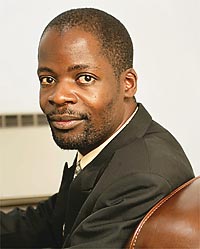
Africa’s economic weakness comes from a failure to commercialize the resources and inventions of the continent, this is according to a self taught Kenyan economist, James Shikwati who is urging Africans to “stop addressing problems and start addressing African opportunities.” Famine, he tells us, is a business challenge: 200 million people are facing food shortage, and they’re a market. Malaria, with 300-500 million cases a year and $12 billion in economic loss, is an economic opportunity.
Chris Anderson references his now-legendary interview in Spiegel, reported under the title, “For god’s sake, please stop the aid“. He is “shockingly misguided, amazingly wrong,” according to Jeffrey Sachs… which makes him very popular already with some of our audience.
“How can you say you don’t have a job in Africa when there are all these opportunities?” Shikwati points to a new Kenyan business focused on indoor insecticide spraying, protecting houses from roaches and mosquitoes for six months. The cost is affordable - from 100 to 400 Kenyan shillings - and providing this service is an entrepreneurial opportunity for otherwise unemployed Kenyans.
The challenge for Africa is for businesses to move beyond their home countries and spread throughout the continent. “What’s missing is not money, but confidence.” Shikwati suggests that use culture to introduce people to business and build their confidence. He wants to “create passion amongst the youth” through business competitions and awards.
He fears there’s a “constrained vision” that Africans suffer from, a need to release the African mind. “If I eat yams, people say I’m poor - I should eat bread. That’s nonsense.” It’s the result of cultural preconception, he believes. “People are looking at African entrepreneurs as corrupt and untrustworthy
- a leader may be corrupt, but Africans are not corrupt.” To succeed, Africans need to challenge these stereotypes, internally and externally.
From the outside, Shikwati tells us, “Aid looks quite sexy. If we see a beggar on the street, we feel we should help him.” But this might not be the right decision. “If you’ve been giving us aid and have made us lose confidence in ourselves… I think you are not helping Africa.” Instead, he asks Shikwati to invest in Africa, or to allow the Africans to sell their products globally. But African companies have to step up as well. “How many indigenous African businesses are ready to tap into COMESA, a market of 400 million people? Or East African Community , a market of 100 million people.”
Shikwati warns us that “countries bring not just aid, but their companies.” If we’re not careful, we end up putting ourselves in a situation where we’re waiting for aid instead of innovating - “we need to be competing with international business”
Thursday, November 15, 2007
Is Africa Chocking on its own development?

Development trends of major African cities have been fuelled mostly by centralisation of important ingredients that spur economic growth. Most resources are revolving around capital cities, which report tremendous growth each financial year at the expense of the rest of the economy. Economic growth is not uniform since such centralisation has had the effect of reversing progress made in terms of economic growth given that everyone is running to the city for opportunities at the cost of the city’s infrastructure, which can hardly support the increased activity. This has turned Nairobi city into a pocket to mouth economy because any monetary gains made in the past are being used to repair damage caused by increased strain of the same resources.
A recent World Bank report estimates that over 5,000 vehicles are registered to Kenyan roads every month, against a back drop of an already over used, narrow and dilapidated road network. Another problem this trend presents is the importation of second hand vehicles which are deregistered from their home countries due to high fuel consumption, old age and high carbon emission into the atmosphere. The result has been increased wastage of time due to preventable traffic jams, environmental damage and an advent of respiratory diseases. With very low earning power, a majority of the city residents cannot afford treatment. Resources that could have been used to develop other regions to create uniform economic growth for the country are being diverted to revert problems of preventable respiratory diseases, damaged roads, increased crime, drug and alcohol abuse among other preventable issues.
Given the above recount, one way of ensuring that growth rates reported reflect the situation on the ground is to decentralise management of the economy in such a way as to create more economic opportunities at the grassroots level thus minimising rural to urban migration. Moving or replicating key economic growth boosters such as roads, information and telecommunication technology (ICT) and government administration from the capital city will present better prospects for growth. Unfortunately, devolution of resources and government is an emotive political issue especially in Africa where there are unfounded fears that different cultural affiliations may create chaos, anarchy or even war; as is the case in Kenya, which is preparing for elections in December 2007 where presidential aspirants are using devolution as a basis for the next government. Devolving government administration and economic centres to areas that desperately need growth would serve to develop these areas thus improve the overall picture of success.
A classic example of a successful devolved approach to resource planning at local level is Norway, which reported the highest quality of life worldwide according to the 2006 Human Development Index (HDI), published annually by the UN, and ranks nations based on their citizens' quality of life rather than traditional economic figures. Norway has managed to successfully devolve its resources and legislation enabling it to report an all-inclusive economic growth year after year. If this has succeeded in the developed world, Africa should not be an exception.
Friday, October 19, 2007
Will Money Solve Africa's Development Problems?

Below are excerpts on from the publication:
YES..... If it is invested in enhancing African capabilities to integrate the continent into global networks of knowledge and creating prosperity and stability. This will mean confronting and overcoming a triple failure: corruption and abuse of power by African governments, predatory practices by extractive industries, and the waste of resources by an uncoordinated and ineffective aid system." “Ashraf Ghani, Chairman Institute for State Effectiveness.”.
NO..... Not as long as there are issues such as prolonged violent conflict, bad governance, excessive external interference, and lack of an autonomous policy space. Alone, money cannot solve Africa’s development problems. Proof, if any was needed, is the fact that many of Africa’s natural resource-rich countries score very low on human development indicators "Dr. Donald Kaberuka, President- African Development Bank.”
Only If..... African entrepreneurs are the key to solving Africa’s development problems. It is they who can drive their continent’s economic growth and it is they who can make their governments better. If money is invested engaging the organic and transformative potential of local entrepreneurs, Africa will flourish. If money is poured into government bureaucracies – which hold back these entrepreneurs – Africa will continue to languish. “ Iqbal Z. Quadir founder GrameenPhone - Bangladesh”
No Way..... The problem in Africa has never been lack of money, but rather the inability to exploit the African mind. Picture a banana farmer in a rural African village with a leaking roof that would cost $100 to fix. If one purchased $100 worth of his bananas, the farmer would have the power and choice to determine whether the leaking roof is his top spending priority. On the other hand, if he is given $100 as a grant or loan to fix the roof, his choice would be limited to what the owner of the big money views as a priority. Out of 960 million Africans in 53 states, there are innovators and entrepreneurs who, if rewarded by the market, will address the challenges facing the continent. “ James Shikwati, founder and Director, Inter Region Economic Network”
No..... By now we should have learned. Donor nations have spent billions of dollars for development schemes in post-colonial Africa, yet there is little to show for this beyond dependency and corruption. Yet current policy and sentiment seem to advocate more of the same. Pop music and movie stars join celebrity academics in trying to shame wealthy nations into committing ever-expanding funds to address African poverty and ill health. This grand scheme mentality has remained immune from the feedback that failed programs ought to have provided. As for the intended beneficiaries, we find a psychological colonialism that has brainwashed the poor into believing the solutions to their problems are to be found in the technical know-how and largesse of wealthy countries. “ Edward Green, director of the AIDS Prevention Research Project at Harvard’s Center for Population and Development Studies.”
NO..... Clearly, money alone does not solve problems. What is needed instead are business, social, and political entrepreneurs who take responsibility for, say, making sure medicines reach victims, rather than more grandiose slogans about comprehensive administrative solutions that only serve as publicity vehicles for raising yet more money for ineffectual aid bureaucracies. Entrepreneurs would be accountable for results, in contrast to the aid bureaucrats and rich country politicians who make promises that nobody holds them accountable for keeping. “ William Easterly is professor of economics at New York University.”
YES..... But there is another way of solving this problem and it is being illuminated by, of all people, some of the poorest parents on earth. These parents are abandoning public schools en masse to send their children to budget private schools that charge low fees of a few dollars per month, affordable even to families living on poverty-line wages. In the shantytowns of Lagos, Nigeria, for instance, or the poor rural areas surrounding Accra, Ghana, or in Africa's largest slum, Kibera, Kenya, the majority of schoolchildren – up to 75% – are enrolled in private schools. “ Professor James Tooley is president, The Education Fund, Orient Global.”
I Thought So…..The President of Rwanda, Paul Kagame, called me to his office to assist him to build private sector capacity and improve export competitiveness. I informed him that it would not be possible for the amount of money and time he budgeted to do my job and train Rwandans at the same time. He told me the story of when he had finally accumulated enough money to provide back pay for his troops who were fighting to end the genocide. He asked them if he could use the money, instead, to purchase helicopters to help end the war sooner. Not a single soldier objected.“Michael Fairbanks is the co-founder of OTF Group, and the SEVEN FUND, which provides grants for enterprise solutions to poverty.”
Read the rest of the Essays by visiting John Templeton Foundation Website.
Thursday, August 9, 2007
Do Africans ever learn? - Lessons from 10, 000 nameless black men.
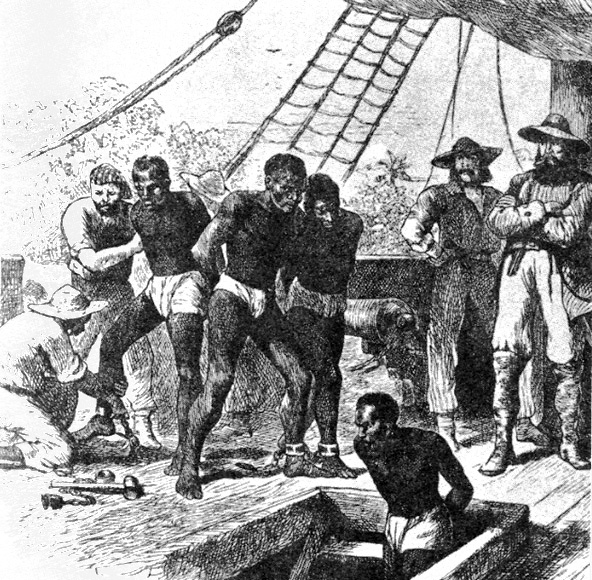
"Way back in the late 1800s, George Mortimer Pullman targeted released slaves from the south of US to work as porters for his “restaurants on wheels” business.
His Pullman Rail Company had hired 20,224 African Americans personnel by the 1920s to serve as what is equivalent to modern day air hostess. A movie entitled “10,000 Black Men Called George” dramatises the tribulations of African Americans who were humiliated as porters but viewed as heroes by fellow black community members.
All the porters were referred to as “George,” after the founder of the company and were supposed to “loose” their real names while at work.
The name “George” was supposedly meant to make it easier for white customers to identify a porter and thereby receive services.
Philip Randolph (hero of American Civil Rights Movement) stepped in to improve the civil and economic rights of these workers through an organisation called the ‘Brotherhood of Sleeping Car Porters’.
The struggle for emancipation in the Pullman company had two faces to it, the generation that had experienced slavery viewed George Pullman as a saviour and did not find the porter job degrading (after all they were being paid albeit poorly), but a younger generation felt agitated and wanted change; they wanted to be called by their real names! (Continues below)
*********************************************************
Top posts this month:
1. South Africa Violence: Why is Brother Fighting Brother?
2. Africa Day is not Socialism Day!
3. Keen on business, China is yet to flex its formidable military muscle in Africa
4. Top secrets: Gaddafi plotted to bomb Kenya
5. Democracy, reforms can end fear of instability
6. Kenya tea loses its flavor in Pakistan
NOTE:
Are the Xenophobic attacks in South Africa Justified?
(Give you view on the violence in South Africa in the poll at the top of this page)
*********************************************************
Take time and read ‘The End of Poverty: How we can make it happen in our life time’ by Jeffrey Sachs; ‘The Bottom Billion: Why the Poorest Countries are Failing and what can be done about it’ by Paul Collier; and ‘The White Man’s Burden: Why the West’s Efforts to Aid the Rest Have Done So Much Ill So Little Good’ by William Easterly.
Let me add one last title, ‘The Black Man’s Burden: Africa and the Curse of the Nation – State’ by Basil Davidson! How many black men called George do you meet in these books?
I find 960 million black people called George! The main characteristics of the African Georges in these books are that they are poor, do not think, do not operate on the plane of asking “what is better and what is worse.” In other words, Africans merely operate on a “hit and miss” trajectory.
The authors of these books attempt to solve the puzzle of poverty in Africa. Jeffrey Sachs argues that a $75 billion per year of Western Aid to Africa can help fix poverty problems.
Paul Collier on the other hand, while sharing Prof Sachs view that the West can help fix Africa, argues that the younger population in Africa is responsible for conflicts on the continent (forget who funds, supplies arms and why conflicts are mostly in mineral rich zones of the continent!). William Easterly’s view is that the Western Aid cannot fix Africa, but he implicitly indicates it could if reformed!
Basil Davidson is not in the class of the above three, he tackles mostly the issue of tribalism as the biggest burden in Africa… to answer him, one could read Lutz Van Dijk’s book ‘A History of Africa’ which argues that we have only three tribes in Africa (Bantu, Nilotes and Cushites), all else are clans or “houses”! (enyumba ya mumbi!) 
Where is his voice in this debate about development in Africa? Three, those who witnessed the salvation from “African barbarism” cannot fathom a World without thinking and instructions from the West. Africans need a Philip Randolph!"
Thursday, August 2, 2007
Will money solve Africa's Problems? A Story of Former Kenyan Millionaires
By James Shikwati
The $7 million compensation towards injuries caused by live ammunition left by the British to 228 Samburu herders did not stop them from spiraling back to poverty. A local TV crew visited the once “millionaire’s town” and found paupers instead. What lessons do millionaires of Maralal give to Africa?
Continues below....
******************************************************************
More Posts: Read the Sarah Palin/Joe Biden US vice presidential debate transcript HERE
******************************************************************
The media has documented events that followed the money boom. The South Africa Star wrote: “Samburu tribesmen and their families are here on a spending spree: drinking, roasting meat, buying bicycles and clothes and flirting with women.”
A Mr Mathenge in Nanyuki observed: “… a variety of con men, masquerading as traders, doctors, preachers, fortune-tellers and soothsayers descended on Nanyuki moments after news spread that money has arrived…” The Standard reported in 2006: “The newly made millionaires were lured by what they considered modernity. Many owned several cell phones, TV sets, and vehicles.
Today, none of these items exist in Maralal, if they do they are in a state of disrepair.” The traditional approach of addressing African problems through the lenses of “big money” misses the point.
The Organization for Economic Corporation and Development (OECD) countries has pumped an estimated $640 billion to Sub Sahara African countries since 1960.
The G8 countries committed $60 billion towards fighting diseases and lately China has dedicated $5 billion in the next three years to Africa. I propose that Jeffrey Sachs, Bono, Geldof, Bill Clinton and other proponents of “big money will fix Africa”, take a short walk to Maralal.
If money was the key to solving problems, banks would send agents on the streets to supply money to afflicted individuals. Banks only offer money to individuals who successfully translate their “problems” into “opportunities.” Money in itself is neutral.
Big Money viewed as capital, has led to strategists (who depict Africa as trapped in a cycle of poverty) to argue for massive external inflows of big money as the only means of escape from poverty.
Viewing money as a receipt for value, a creation and resultant effect of exchange between different parties; offers a chance to translate African problems into opportunities.
The herder’s predicament points at the fact that what Africa needs urgently is not money. We need a mindset that will engage in a rational response to the challenges that face the continent. I refer to this type of mindset as “capital,” without which money or external solutions to the continent will come to naught. This explains in part the paradox of the continent being resource rich and full of poor people.
Investing in a “mindset” as capital calls for individuals to be creative from a commercial perspective on how they address their daily challenges.
For example, if Kenyan architects visited Kibera, and came up with a design of housing units that guarantee safety, sanitation and can be moved whenever the government wants to relocate people, they will have solved a slum problem.
It will make sense for banks to offer loans towards such a venture than simply order banks to build houses for the poor. The architects and the bank will both make millions of shillings turning a problem into an opportunity.
The actual worth of money lies in “exchange of value,” and that is what we should be pushing Africans to do at village, national, continental and international level. The lesson from Samburu is that money is just paper, it’s the value it guarantees that Africans ought to go for.
Unless the capital in form of the African Human Mind is exploited, all the do-good projects are destined to join the “bubble millionaires.”

