From The Economist Print Edition The death of a decent president, Zambia’s Levy Mwanawasa, raises questions about the state of leadership elsewhere in the continent
ON PAPER, Levy Mwanawasa should never have been president. He lacked charisma, wit or style—the sort of qualities that propel populists to high office in much of Africa. At rallies even his own supporters were fast bored by the former lawyer’s monotone drawl. His ill-health and slurred speech, the results of a car crash, led to nasty jibes about his mental capacity. When he narrowly won his first, disputed, presidential election in 2001, opponents dubbed him “the cabbage”, deriding him as a stooge for others more powerful.
But Mr Mwanawasa, who died this week in France after suffering in June the latest of several strokes, deserves to be remembered more fondly than the showmen who have beggared much of the continent. In the past seven years he made a serious effort to clean up Zambia’s pervasive corruption. At some political risk, he turned against his predecessor and one-time patron, the diminutive Frederick Chiluba, who was charged with 168 counts of theft. Mr Chiluba was convicted of graft in a civil court in London last year. It was a rare success: few African leaders have been held to such account.
Partly because of his anti-corruption drive, investors liked President Mwanawasa. In the past few years, capital has poured in. Zambia’s mineral-rich economy, like others in Africa, has soared and crashed according to the vagaries of world commodity prices. But its recent growth, at a perky 6% or so a year, driven by copper exports, has at least been married to decent policies that kept inflation lowish and helped spread some benefits to the poor. The economy was lifted, too, by tourists and white farmers diverted from Zimbabwe. Thanks to liberalisation and his own stolid efforts, Mr Mwanawasa got unusually large dollops of aid and debt relief.
In 1991 Zambia was among the first in Africa to bring back multiparty elections; it peacefully ditched its liberation leader, Kenneth Kaunda, after nearly three decades. That generally gracious transition (Mr Kaunda was later accused of skulduggery) was followed by Mr Chiluba’s decision to step down reluctantly in 2002 after the two terms limited by the constitution.
Zambia’s plodding progress could hardly be in greater contrast to the mess next door in Zimbabwe—once Southern Rhodesia to Zambia’s Northern Rhodesia. In the old days, Zambians flocked to Zimbabwe to seek work; now it is vice versa. Robert Mugabe, reliant on his army’s muscle, seems bent on staying on, having smashed his economy. He returned himself to office in June after a violent one-man run-off election. Though he has been holding power-sharing talks with the opposition leader, Morgan Tsvangirai, who won the first round of the presidential poll in March, he is loth to lose executive power.
Zimbabwe’s crisis may well have been resolved by now if regional leaders had dared to stand up together against the repressive Mr Mugabe. On August 16th, at an annual meeting in Johannesburg of the Southern African Development Community (SADC), the 14-country club’s leaders, most of whom also head liberation-movements-turned-ruling-parties, muted their public disquiet at the presence of the 84-year-old despot.
An exception was Botswana’s new president, Ian Khama, who boycotted the event. Mr Mwanawasa, aged 59, was also a rare voice among Africa’s leaders who damned Mr Mugabe’s misrule. Last year he likened Zimbabwe to a “sinking Titanic” and called for the region to demand a change of course. Had he been well, he would have sought to toughen SADC’s stance against Mr Mugabe. Mr Tsvangirai was among the first publicly to lament the Zambian leader’s death.
A new leader, possibly the vice-president, Rupiah Banda, should be elected within 90 days. Afro-optimists hope that Zambia, certainly not Zimbabwe, proves to be a bellwether for the continent. In one respect it is. Though not an oil-producer, Zambia is one of Africa’s biggest recipients of Chinese investment, as the resource-hungry Asian giant pours capital into mining and agriculture. China’s president, Hu Jintao, inaugurated a massive mining-investment zone in the north of Zambia last year. However, among ordinary Zambians anti-Chinese feeling has been growing.
Mr Mwanawasa crowed last year that Zambia, and Africa as a whole, was increasingly taking advantage of Asian interest and investment and called on the West to match it. Seven years of Mr Mwanawasa’s rule has seen some change for the better in Zambia. It is remarkable what a dull diet of cabbage can do.
Monday, August 25, 2008
The death Zambia’s Levy Mwanawasa, raises questions about the state of leadership elsewhere in the continent

Tuesday, October 2, 2007
The passing of an African Statesman - Dr. Charles S. Brown [Aug 5, 1947-Sep 29, 2007]
I dedicate this post to my brother and friend, Benin Mwangi whose father Dr. Charles S. Brown passed away on 29th September 2007. Benin may the lord see you safely through this moment of grief. You have inspired many. It's now evident where all your passion and love for Africa came from. God bless.
Adopted from Benin Mwangi.com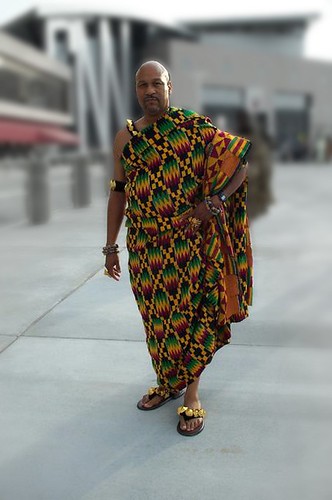 Born on August 5th 1947, Dr. Charles S. Brown grew up at a pivotal time for Black America. As a young student at Morehouse College he was able to witness and be a part of America’s civil rights movement. After reading books written by Dr. W.E.B. Dubois and Kwame Nkrumah Dr. Brown began to become exposed to a wider perspective. Afterwards, he gradually gained an appreciation for African history. Over time this appreciation would continue to grow and less than ten years after obtaining his PhD in physics he began to research ancient African civilizations. His study was so intense that over a three year time span, he became an authority on the subject.
For Dr. Brown, learning about ancient African civilizations meant more than just being able to quote a few abstract facts, he believed that if he could help African American youth become aware of their true heritage it would be easier for them to dream big. Integrating scientific finds on these ancient civilizations into mathematics or physics curricula for his university classes would later become one of Dr. Brown’s most recognizable hallmarks.
But the event that would later shape his outlook on modern Africa continent took place when he attended the First Edward Bouchet International Conference on Physics and Technology on June 11, 1988 in Trieste, Italy. The Edward Bouchet Institute is today called the Edward Bouchet Abdus Salaam Institute. One of its aims is to foster scientific and technical collaborations between African and American scientists and engineers. Prof Charles S .Brown’s first trip to the African continent occurred in 1990 when he attended the second Edward Bouchet Institute Conference in Ghana. It is through the Edward Bouchet Institute that Professor Brown met the internationally renowned Professor Francis K. Allotey. In the fall of 1991, Prof. F. K. A. Allotey of Ghana visited with Prof. Charles S. Brown, who at that time was the Chairman of the Physics Department at Clark Atlanta University (CAU). The collaboration between Prof. Allotey, Prof. A. E. Bak, and Prof. C. S. Brown resulted in two published papers.
Prof. Allotey, four years later arranged the visit of Prof. Charles S. Brown to Cape Coast, Ghana, where he worked as a Fulbright Visiting Scholar (December 1995 – May 1996) and an ICTP Visiting Scholar (June 1996 – December 1996). Prof. Brown helped to develop the University’s graduate curriculum, served as a research advisor for a physics doctoral candidate, and collaborated on a research paper with Prof. S. Y. Mensah, Chairman of the Physics Department and Vice Dean of the Faculty of Science at the University. The work that Prof. Brown did in Ghana did not go unnoticed; in fact it was instrumental in his enstoolment as a traditional ruler in the Assin Manso district of Ghana.
To elders and other traditional rulers in this district Prof. Brown was known as Nana Kwodo Amoah I. It is a role that he took very seriously, even until his passing.
I love you Dad. I know you are in a better place. Benin Mwangi
