 My good friend, Branded-thank you so much for helping to expand and share the knowledge on this whole United States of Africa idea that just swept by. Also, there are many wonderful online pieces on this United States of Africa. I have spoken to a number of people on the subject also, many have been from various African nations. While, others that have shared their thoughts on the subject have been from other parts of the worlds. What the conversations seemed to mirror in each other was a certain level of caution. Primarily, I felt this to be more of cultural or a social concern- the question of "whose voice takes precedence under a United States of Africa?" Whether social or not though, I have to say that it is a very valid concern. So, I think that the decision to apply the brake pressure and slow down was a very wise one. There are just too many issues that would have to be addressed before the discussion could become practical.
But underneath this, it should also be said that a more united continent could have the potential to bring about almost unfathomable macro economic benefit to certain areas and sectors on the continent. Believe it or not, just prior to the 9th Assembly of African Union Heads of State, I spoke with several experts on the subject of business across African borders and I believe that they bring some unique and tremendous insights to this topic.
One of the many people whose ideas on this topic have helped to shape mine was East Africa America Business Council Chairman and official Liaison of the East Africa Community, Mr. Patrick Ayota. I asked him, what did he think about the idea of African countries removing their borders all together and could there be any benefit to doing this and here's what he had to say,
"A more connected Africa would reduce the existing barriers that prevent African nations from doing more business with one another. Also, it could reduce costs. However, it is not necessary to have a single president for such a union to work. Here's what could work:
Creating a highway infrastructure linking the the countries together.
Removing visa requirements for members of the union
Creating a common market He goes on to add, "On a smaller scale this has largely already done by the East Africa Community (EAC). There is now a single entity in the EAC that licenses companies moving products between Uganda, Kenya, and Tanzania. This means that a Ugandan company can hire a Tanzanian employee and offer the same benefits to that employee that a Ugandan employee would receive. Also, Mr. Ayota illustrates countries working out there differences, "because Kenya has a stronger economy than Uganda and Tanzania, it has agreed to allow its neighbors to temporarily impose small tariffs on Kenyan goods. While Kenya has removed tariffs on goods from Tanzania and Uganda."What Mr. Ayota mentioned, as far as that cooperation between the East African nations is something that you don't often hear about coming from neighboring states on the continent, however this shows that it does and can happen. Of course, it has not always been this way between the three countries that he mentioned and it is in fact the result of an amazing amount of time, hard work, and diplomacy between the three nations. But, I believe that this is exactly what we need to see happen in order to make this discussion more practical. And I would think that it must happen, for a number of reasons. But primarily because today's voters on the continent are a lot more savvy than they were just one generation ago. Before they agree to go along with just any suggestion, my observation is that it would be better to demonstrate some of the benefits first. And isn't that the case around the globe? So, I agree with Mr. Ayota, before any serious thoughts of unifying all or a large part of the continent under one rule, there must be more connectedness on the basic items-like standardized educational systems with continental accreditation, looser tariffs, free movement of nationals across borders, better intra-roadways, communication systems, and a stronger system to support and document investment from one border to another. However, with the rise of the continent's regional economic blocks these things are slowly becoming materialize within smaller regions on the continent
I also had the pleasure of speaking with an investment researcher from the world acclaimed Barron's , Mr. Ryan Shen- Hoover. I asked him roughly the same question that I asked Mr. Ayota and Ryan's response was focused more along the lines of stock markets across the African continent and what these stock markets might look like if they were merged into one market.
Here's what he says,
"In brief, I believe a continent-wide stock market would be a welcome development for all involved. It would greatly lessen the difficulty of opening trading accounts in a dozen or so different countries and therefore would be great for any investor seeking exposure to more than one country. It would likely also have the effect of unlocking value in some companies that are listed in markets that trade infrequently (e.g. Swaziland, Ghana, Malawi) and could have the opposite effect in some of Africa's more overheated markets ( e.g. Nigeria and Kenya).So, how would a common stock exchange be brought about? There are a couple ways it might happen.
One way would be for all countries to sit down and hammer out the structure of a totally new market. They would agree on listing and reporting requirements, trading rules, location, etc. One obstacle I see to this is that most countries take a degree of pride in running their own national stock market. It would take a lot of political will to dissolve them in favor of one continent-wide market.
The other way to achieve a common market is more organic. Already in East Africa we are seeing Kenyan companies trade on not only the Nairobi Stock Exchange, but the Ugandan and Tanzanian exchanges, too. This is called cross-listing. Some other companies cross-list on the Johannesburg and Namibian stock exchanges. If one of the big exchanges (perhaps Nigeria, Kenya, or South Africa's) would actively encourage cross-listings, we could see a common market develop quite quickly. And each country could continue to run its own national market if it wished to do so."
I like Mr. Shen-Hoover's notion of voluntary participation on the part of African stock markets, whereby exchanges in different across different African borders can decide whether to cross list based upon the perceived risk or reward, rather than having the idea imposed on them. This to me would seem like more of a natural course to the continent finding that ever elusive unity that the founding fathers of the AU through the Organization of African Unity dreamt about only one generation ago.
So we said all of this to say what? Well, what we are getting at is that like Mr. Ayota says it is possible to harness the economic power of a unified continent without necessarily having all the continent's nearly 1 billion human inhabitants under a single national banner. Furthermore, the steps mentioned here need not be mandated. In fact, mandates seem to stir apprehension within voters. Instead, a more gradual and laizzez faire approach might be the way to go about this. One more thing that I failed[Photo] to mention earlier is that the African Union decided to support the further development of the continent's 14 regional integration groupings-I say that if nothing else ever comes out of that 9th Assembly of the African Union Heads of State this development in itself is major. Although, I wouldn't have minded hearing the AU discuss how to fully harness the power of the informal economies existing in different regions of the continent.
Monday, July 30, 2007
Experts Trade Views on US of Africa with Benin Mwangi

Tuesday, July 24, 2007
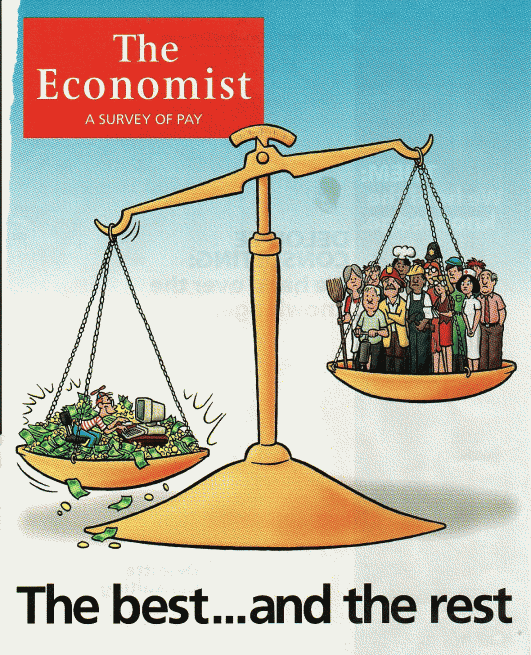
An "offensive" article in the Economist magazine forces the Kenyan Government to cancel crucial global trade talks
 By John Oyuke (www.eastandard.com)
An offensive article in an international magazine forced the (Kenyan) Government to withdraw from a high-level political and business forum last week.
The inaugural business roundtable with the Government, billed as a first in East Africa, was to give business leaders opportunity to engage with a high-powered team led by President Mwai Kibaki.
The meeting, organised by Economist Conferences, the events division of Economist Group, was to run from July 17 to 18 at the Intercontinental Hotel, Nairobi.
Finance minister, Mr Amos Kimunya, said the meeting was cancelled because of an offending article in The Economist.
"Things were going on well until someone who claims to have returned to Kenya after 40 years decided to write a three page article claiming that no development had taken place in the country since then," he said.
The Economist Group postponed the meeting a few days to the conference, but did not explain why.
"The First Business Roundtable with the Government of Kenya has been postponed. The new date will be published as soon as we receive confirmation from the participating officials from the Government," the group said.
A number of firms had already come forward to sponsor the roundtable with Barclays Bank Kenya offering Sh5 million as sponsorship fee.
According to the event’s programme, President Kibaki was to be accompanied by key ministers including Finance, Trade and Industry, Planning and Roads and Public Works. Other key speakers would have been Prof Njuguna Ndung’u, Governor, Central Bank of Kenya, Mr Jimnah Mbaru, Chairman, Nairobi Stock Exchange, Mr Adan Mohammed, Managing Director, Barclays Bank Kenya and Mr Nathan Kalumbu, President, Eastern and Central Africa Division, Coca-Cola and world reknown economist Professor Jeffrey Sachs.
The article, which appeared in The Economist of June 9, is entitled "Kenya: Going up or down?"
The article stated in part that for someone returning to Kenya after many years, the general state of disrepair is rather striking.
It adds that tens of billions of dollars of aid have been spent, yet in many respects the country’s infrastructure is worse than it was 40 years ago.
"Roads have crumbled away, the rail service has all but collapsed, ports are clogged and some have even closed. Many hospitals and schools are dilapidated.
Forests have been cut down, rivers have silted up; grazing land has been eroded, and fencing posts in once well-run commercial farms uprooted and burnt," it alleged.
The most visible example of Kenya’s regression is the roads, the article pointed out.
It said while in the early 1970s you could drive from Nairobi to Mombasa in four hours, now, because of potholes and diversions and hold-ups, it could take eight hours.
"Another main road, north-west to Uganda, which should be one of Africa’s great arteries, is pitted with craters often two feet deep, reducing traffic to little better than walking pace for stretches of 15km or so," the article avers.
The article poses the question of why the current mess exists and proceeds to give the answer as misguided economic policies, mismanagement, poor maintenance, sloppiness, tribalism and corruption.
Kimunya told a private sector stakeholders’ meeting in Nairobi last week, he considered their gathering a worthy replacement of the failed roundtable.
He said the Government considers The Economist a serious magazine to allow itself publish an article which doesn’t reflect the country’s real development situation, leave alone what has taken place in over 40 years of independence.
John Oyuke is a business writer for The Standard a mainstream Kenyan Newspaper
Friday, July 20, 2007
Zimbabwe needs other Africans' help
 By Rejoice Ngwenya - Harare, Zimbabwe
EITHER WE AFRICANS are blind, selfish and greedy or something worse is holding us back. As a Zimbabwean I have seen my country turned from bread-basket into basket case and I can tell you that our educated and hard-working people are not fools but victims.
Although we are an extreme case, these oppressive economic and political policies are not exclusive to Zimbabwe.
The fallacy of the African dream of Ghanian founding father Kwame Nkrumah about self-rule as been exposed by the brutal failures of governments with a revolutionary history. Julius Nyerere, Kenneth Kaunda, Milton Obote, and perhaps even such so-called models of excellence as Yoweri Museveni and Thabo Mbeki, all espoused Nkrumaism, meaning state control of the economy and even of society.
Just down the road where I live, there is Zimbabwean President Robert Mugabe, who was not only a student of Nkrumah's but taught and married in his country.
Many Africans believe we should cooperate with each other instead of overseas markets to achieve the economic, political and cultural integration which could raise our continent to the level of Europe or the United States.
The challenge is not cooperation but how we should learn from history.Before Zimbabwe overthrew white rule, in 1980, a pothole on the highway was a disaster. A late train would cause public outcry. Now we have unfinished roads, bulldozed neighbourhoods and hyperinflation, while our dictator blames the West.
Why is it that when the white man handed over Air Rhodesia to a black manager, the airline had 30 airplanes but now there are only three left? Why is it that before 2000 there were only 4,000 white commercial farmers in Zimbabwe and we were the bread-basket of southern Africa, yet now there are 40,000 black commercial farmers and we have to import maize from little, poor Malawi?
I know. There is a fine line between self-criticism and self-loathing. But our problems are not caused by our being black but by authoritarians with incompetent and even urderous policies.
Today, Zimbabwe's health system has collapsed. Our main university once had 1,000 staff, now there are 300. A typical high-school teacher now earns around $20 a month. As you read this, my car is grounded because of lack of petrol. Service-station owners cannot sell it for the paltry controlled price of about 11 U.S. cents a liter when they have to buy it for about $1.  My home has neither running water nor electricity. Mugabe's ZANU-PF government inherited one of the most sophisticated hydro-electric power plants in Africa, Kariba. But because of a gluttonous army, expensive anti-riot gear and military adventures in Mozambique and Democratic Republic of Congo, Mugabe has failed to maintain Kariba. It is about to stop completely.
Hwange Colliery Mine has some of the richest coal deposits in the world, yet the thermal power station across the road does not have enough coal because the railway has collapsed.
In Harare, raw sewage flows openly in residential areas, contaminating scarce treated water because of pipes that have rotted since they were inherited from the white regime 27 years ago.
No private radio or television station is allowed to operate in Zimbabwe, while it is almost impossible to register a private newspaper. Yet Robert Mugabe masquerades on the regional stage as the spokesperson for the beleaguered citizens of Zimbabwe. He has absolutely no right to speak on our behalf. Those who do are the citizens protesting in the streets and some judges and lawyers struggling valiantly to hold together the shreds of the rule of law.
The lessons of history include the basic principles of good governance. There are plenty of examples for us to emulate but the Mugabes of the world ignored them in favour of ideology.
Africans do need each other to develop but our ability to learn from each other's mistakes is miserable.
Even our neighbor, democratically elected South African President Thabo Mbeki, repeats with nauseating frequency that Zimbabweans have the capacity to solve their own problems. But during Mbeki's protracted struggle against apartheid he had the frontline states backing him, led by Mugabe.  Today, Mbeki and his ilk treat Mugabe like a hero but Zimbabweans like dirt.
South Africa goes on military "peacekeeping" forays to faraway Sudan and Burundi. Why does Mbeki not believe those countries can solve their own problems?
We Africans will remain smothered in self-deceit until this generation of Nkrumaists, the greedy, the corrupt and the accidental democrats, has expired. Then African citizens may become free to cooperate with each other, economically and politically.
The one form of cooperation we need right now is world pressure on Africa's democratically elected leaders, not the avoidance seen at the recent G-8 summit in Heiligendamm. Only then might they face up to their moral, political and economic obligations to embrace freedom and boot the gangsters out.
(Rejoice Ngwenya is a Zimbabwean columnist and campaigner for liberal democracy and a free market economy)
Africans are not Beggars!
 Africans are not beggers, declares James Shikwati, Director of a Kenyan Think Tank, Inter Region Economic Network (IREN) through The African Executive online magazine (www.africanxecutive.com).
Africans are underpricing their raw materials and commodities to developed nations because their bargaining power is lowered by the weight of foreign aid and debt relief. Countries that feature on the debt relief sheet coincidentally have raw materials of strategic importance to Western nations and China. For example, Niger has Uranium, Nigeria (Oil), Democratic Republic of Congo (Uranium, Coltan and Cassiterite among may other minerals). Uganda has Oil and is the gateway to East DRC. The majority of countries on the debt relief list are also involved in some form of violent conflict that is linked to subsurface wealth.
Take for instance Democratic Republic of Congo, a country that holds the world's estimated 70% of Coltan and 34% of Cassiterite, two strategic minerals in the production of cell phone, laptops and other portable electronics. Stan Cox, a journalist with Channel 4 TV last year pointed out how 50 kilogram packs of Cassiterite fetch $400 on the world market while it fetches Congolese $5 if they are lucky not to be robbed by soldiers. Recall, DRC has only 300 miles of paved roads (good place to send AID for roads eh?) The World cell phone industry is churning out 25 cell phones per second everyday. Supposing DRC was stable politically and traded its products in a sober manner in the World market, would it queue for aid? (Put another way, who gains when African countries are politically unstable?)
Recently, G8 leaders announced a $60 billion aid package to enable Africa fight HIV-Aids and other diseases. What the leaders never told the world is the billions they are raking out of Africa through extraction of subsurface wealth when they con our leaders into believing that we are poor and incapable of solving our own problems. The current relationship between "moneyed" countries and Africa is very much similar to those who target Mumias sugar cane farmers to lease out their cane and or sale their company stock shares to address short term needs.
Rich countries are smart. They too focus on "sexy" headline grabbing packages such as disease and poverty to engage in what may become the greatest fraud in the World once all facts are pinned together. Africans are not beggars, we are simply being conned! We must urgently develop "Irrevocable Forms" to ensure we get right pricing for our products.
You can read more on by visiting http://www.africanexecutive.com
